SMS Gateway Multi SIM Capacity Cost Structure & Payback Math: A Calculable Ledger
Is buying a multi-SIM SMS gateway worth it? That question shouldn’t be answered by “gut feeling.” According to GII Research’s A2P SMS market analysis, the global A2P SMS market was valued at approximately $85.98 billion in 2024 and is projected to reach $139.21 billion by 2033. The market is growing, but your per-message cost determines how much of that growth you capture. SMSEagle’s payback calculator offers a straightforward way to model this—input monthly volume and current unit price, and see how long it takes for saved channel fees to cover hardware purchase cost. Below we apply the same logic to break down the cost structure of a Telarvo SK-SMS Gateway.
Hardware Purchase Cost: The Transparent One-Time Investment
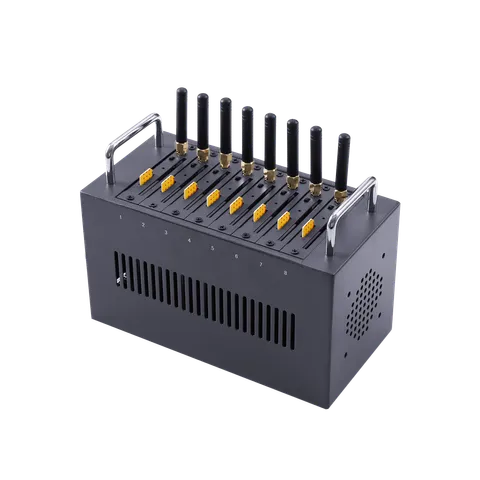
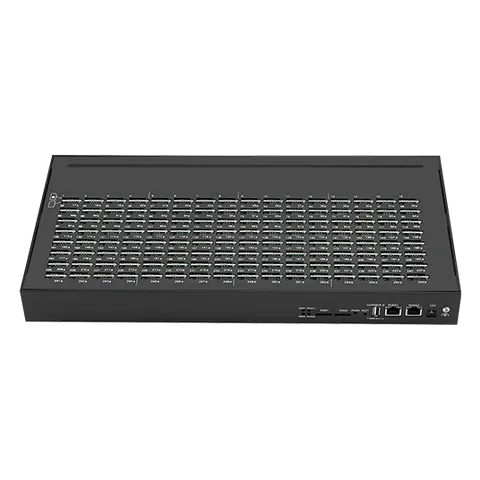
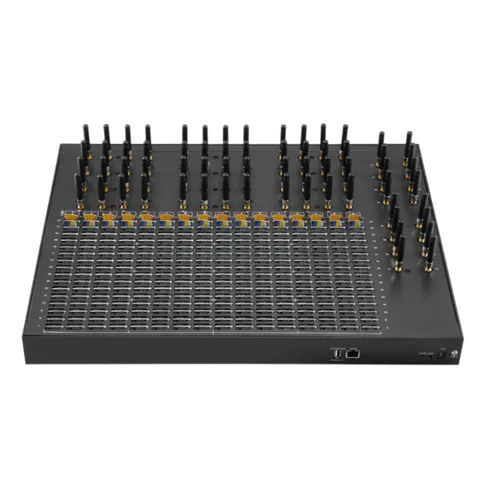
Telarvo’s SK-SMS Gateway series pricing is public. Take the mid-scale SK-SMS Gateway 32-512—32 ports, 512 SIM slots—listed at $1,690. The 64-port, 512-slot 64-512 is listed at $2,480. For scenarios requiring higher concurrency, the 64E-SIM version (eSIM solution) is listed at $4,080. This is a one-time expense—you’re buying a hardware asset, not a recurring channel fee.
But hardware price alone isn’t the decision basis. The real cost structure requires comparing “the unit price you pay an aggregation platform if you don’t buy hardware” side by side. Salesforce’s SMS multiplier documentation lists country-specific multiplier factors—for example, Germany at 77.69, the UK at 35.13, India at 67. These multipliers applied to a base rate produce the actual per-message price you pay an aggregation platform for international SMS. Local SIM routing logic uses local numbers to bypass these multipliers.
SIM Cards and Carrier Rates: The Variable Cost of Ongoing Operations
Beyond hardware, SIM monthly fees or prepaid plans are ongoing costs. Rates vary enormously across countries and carriers—there’s no universal answer. But one principle holds: the point of multi SIM capacity is that a deeper number pool lets you spread per-card send volume so each card’s frequency falls within the carrier’s low-rate or no-surcharge range, rather than running one card until it’s throttled or suspended. Telarvo devices support automatic and manual SIM rotation plus configurable rate control, essentially helping you keep SIM costs within the “economic zone”.
Payback Calculation: Three Variables Determine the Cycle
Calculating the payback period isn’t complex. There are only three core variables: your monthly send volume, your current per-message cost on an aggregation platform, and your local routing per-message cost after self-hosting.
Assume you currently send international SMS through an aggregation platform at a blended $0.05 per message (a simplified example for calculation; actual rates vary enormously by destination and volume). At 200,000 messages per month, monthly channel spend is $10,000. With a Telarvo 64-512 device ($2,480) plus local SIM routing, assume blended local routing cost drops to $0.02 per message (including SIM fees and operational amortization)—monthly spend becomes $4,000. Monthly savings of $6,000 means hardware pays back in under half a month.
The most sensitive variable in this calculation is volume. Below 30,000 messages per month, the hardware payback period stretches to months or longer—SaaS aggregation platforms may still be the lighter choice. Once monthly volume crosses the 100,000 threshold, the cost advantage of self-hosted hardware becomes significant.
The Overlooked Hidden Costs: Integration and Operations
Payback math can’t View only hardware and channel fees. SMPP/HTTP API integration effort, SIM procurement and management, and day-to-day device monitoring are real costs. Telarvo devices include free sending software supporting multi-threaded sending, auto-retry, and delivery tracking, which reduces some software procurement and operational burden. But if the enterprise lacks basic server operations capability, that labor cost must be factored in.
Here’s a structured cost comparison:
| Cost Item | Aggregation Platform Model (Monthly) | Self-Hosted Hardware Model (First Month + Monthly) |
|---|---|---|
| Channel Fees | Per-message, includes intermediary markup | Local SIM rates, no intermediary markup |
| Hardware | None | One-time $1,690–$2,480 (32-512/64-512) |
| Software | Usually bundled in channel fees | Free sending software included with device |
| Operations | Borne by platform | Borne by enterprise (or outsourced) |
| Integration | API integration, usually simpler | SMPP/HTTP API integration, requires technical investment |
When the Math Works
Self-hosting isn’t for every scenario. When monthly volume is consistently above 100,000 messages, target markets are relatively concentrated (easier local SIM management), and the team has basic server operations capability—when all three conditions hold, the ROI on SMS gateway multi SIM capacity is clearly calculable. Conversely, if volume fluctuates wildly, target markets are spread across a dozen countries with small volumes in each, and the team lacks operations manpower, the flexibility and zero hardware investment of aggregation platforms remain the more rational choice.
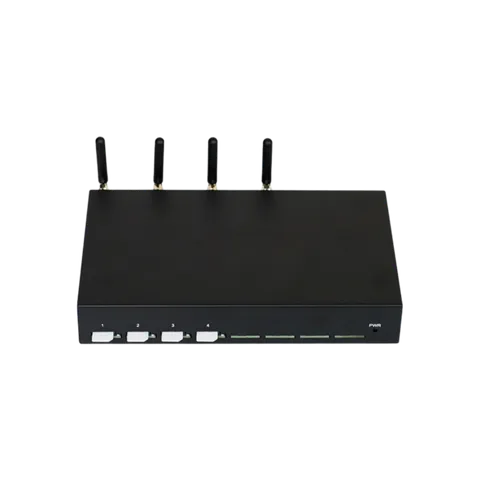
Telarvo’s SK-SMS Gateway series pricing gradient from 4-4 ($238) to 64-512 ($2,480) essentially matches different volume tiers of payback math. The 4-port version suits small-scale trials to verify “whether self-hosting is viable”; the 64-port version is the cost tool for scaled operations.
An Underestimated Variable: How Delivery Rate Affects Payback
Channel fee savings presume messages actually get delivered. Sinch’s SMS deliverability guide notes that carrier filtering and network congestion are common causes of undelivered SMS, and peak-period network overload (e.g., Black Friday) significantly pushes up latency and failure rates. If self-hosted hardware’s multi-SIM rotation strategy is poorly designed and large number of messages get blocked by carriers, saved channel fees are offset by resend costs and business losses. The value of multi SIM capacity isn’t just “more”—it’s whether the rotation strategy keeps each card within the carrier’s acceptable send frequency. Telarvo’s rate control function is designed precisely for this.
Frequently Asked Questions (FAQ)
What’s the most commonly overestimated variable in payback calculations?
It’s “local routing per-message cost.” Many people only count SIM card rates, ignoring SIM procurement, management, replacement, and potential monthly fees. In actual calculation, include all SIM-related expenses before comparing against aggregation platform unit prices.
At what monthly volume does self-hosted hardware start to make sense?
There’s no absolute threshold. A rough rule of thumb: below 30,000 messages per month, fixed hardware costs aren’t sufficiently amortized and aggregation platforms are lighter; past 100,000, the cost advantage of self-hosting becomes clear. But the specific answer depends on target countries, SIM rates, and operations manpower.
Can one Telarvo device cover multiple countries?
The device supports global 2G/4G bands, but SIM cards must be procured from local carriers in target markets. A single 64-512 device can hold 512 SIM cards from different countries, but you need to confirm each carrier’s cross-border usage policy and roaming rates.
If send volume grows rapidly, does the payback calculation need to be redone?
Yes. Volume changes alter the cost structure. When volume doubles, the marginal cost of self-hosted hardware (mainly SIM cards and operations) grows far slower than per-message aggregation platform billing, shortening the payback period. Telarvo’s multi-port product line supports cluster expansion, allowing capacity increases without platform replacement.
Is the bundled software an extra charge?
No extra charge. Telarvo devices include free SMS sending software supporting multi-threaded sending, auto-retry, and delivery tracking. Custom features or deep system integration may require evaluating technical investment.
How do I get a payback calculation template for my volume tier?
Contact Telarvo’s consulting team with your monthly volume, target markets, and current channel unit price. We’ll help you complete a preliminary calculation based on SK-SMS Gateway pricing and specifications.
About Telarvo
Telarvo’s positioning isn’t “the cheapest SMS hardware”—it’s a tool that converts SMS sending costs from operating expense into asset investment. Our SK-SMS Gateway series covers 4 to 64 ports with up to 512 SIM slots, priced from $238 to $2,480, so teams at different volume tiers can find a starting point matched to their send scale. All devices support SMPP and HTTP API, include free sending software, and carry a 12-month warranty. We don’t promise “buy it and you’ll definitely save money”—payback depends on your volume, routing strategy, and operations capability. But we’re willing to help you run the numbers before you decide whether it’s worth the investment.
Sources:
- GII Research — A2P SMS Market Size, Share, and Growth Analysis
- SMSEagle — Pay-off Calculator
- Salesforce — SMS / MMS Messaging: Supported Countries with Multipliers
- Sinch — Domine a entregabilidade de SMS
- Telarvo Blog — High Capacity SMS Gateway Server: Reading the Specifications That Matter
- Telarvo Blog — Bulk SMS Machine with SIM Slots: Gateway Models Compared
Blog
Learn more
Enterprise VoIP Gateway Security Hardening: Toll Fraud Prevention Strategies Through the VOIP Gateway
A VoIP gateway for regulated industry needs defense in depth: IP ACLs, strong SIP auth, voice VLAN isolation, and ASR/ACD anomaly alerts to stop toll fraud.
VoIP Gateway Deployment Checklist: 15 Compliance and Security Checks
Before deploying a VoIP gateway, run these 15 checks: power and cooling, VLAN isolation, SIP IP whitelisting, SIM real-name compliance, and security hardening.
How SMS Gateways Multi-SIM Management Cuts Carrier Throttling Risk
A practical guide to SMS gateways multi-SIM management: rotation rules, round-robin balancing, failover, and remote SIM pools—without triggering carrier caps.