SMS Gateways Multi-SIM Management Compared: Standalone Gateway vs. USB Pool
Table of Contents
- Form Factor Difference: Standalone Network Device vs. PC-Dependent
- SIM Management Capability: Remote Hot-Swap vs. Physical Swap
- Scalability Comparison
- Failover
- Applicability Criteria
- FAQ
When building an SMS sending channel, there are two common choices: an enterprise SMS gateway and a USB modem pool. Both can achieve SMS Gateways Multi-SIM Management, but they differ significantly in form factor, scalability, and reliability.
Form Factor Difference: Standalone Network Device vs. PC-Dependent
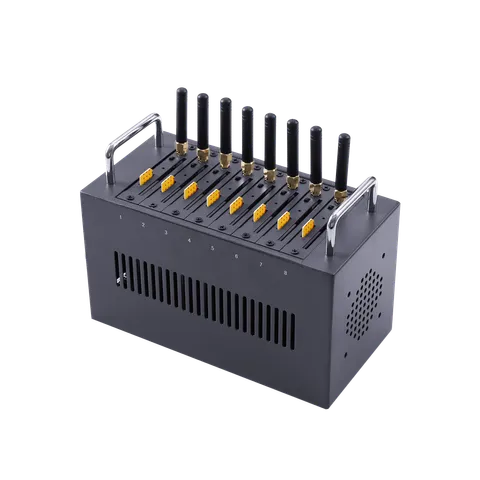
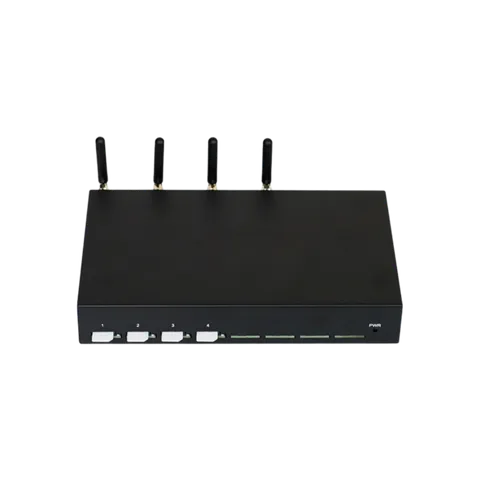
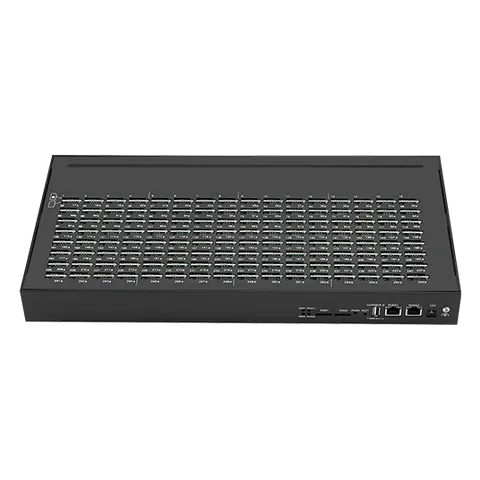
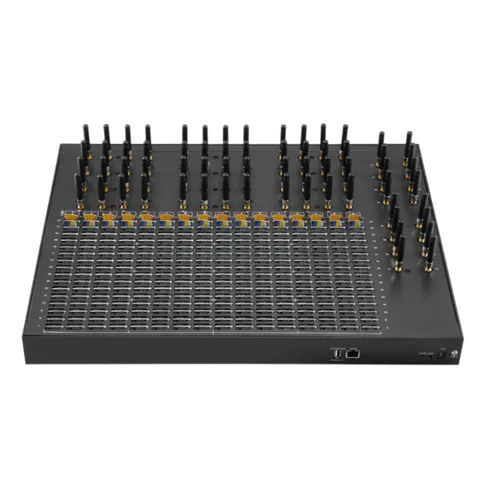
The Telarvo SK-SMS Gateway 16-256 is a standalone network device with its own processor, network interface, and web management panel—manageable via browser right after power-on. A USB modem pool depends on an always-on PC connected to multiple modems through a USB hub. A PC shutdown or system failure directly interrupts sending.
In one case, we connected 8 modems to a 16-port USB hub. After 4 hours of continuous sending, the hub’s power supply was insufficient, 3 ports dropped offline, and sending was interrupted for 22 minutes. A standalone gateway’s power and thermal design is sized for its own load; a USB hub’s power headroom is often insufficient under sustained load.
SIM Management Capability: Remote Hot-Swap vs. Physical Swap
Enterprise gateways support remote SIM management and switching through a remote SIM pool. USB pool SIM cards must be physically swapped one by one, limited by the number of USB ports on a single PC.
Scalability Comparison
The SK-SMS Gateway 16-256 offers 256 SIM slots in a single device. A USB pool reaching a similar scale requires many USB ports and cascaded hubs, with power and bandwidth issues amplifying with scale.
Failover
Enterprise gateways support SIM-level and gateway-level failover. Most USB pool solutions have no built-in automatic switching; one failed card means that channel needs manual intervention.
Applicability Criteria
| Comparison Dimension | Enterprise SMS Gateway | USB Modem Pool | Applicability Criterion |
|---|---|---|---|
| Form factor | Standalone network device | PC-dependent | Choose gateway for 24/7 operation |
| SIM management | Remote management | Physical swap | Choose gateway when SIM count > 50 |
| Scalability ceiling | 256 SIM slots | Limited by USB ports | Choose gateway when daily volume > 500 |
| Failover | Automatic | Usually none | Choose gateway for OTP/time-sensitive traffic |
| Cost | ~$1,080 (16-256) | ~$200 for 16 ports + always-on PC | Use pool for small-scale short-term |
On cost, a 16-port USB pool costs about $200 in hardware, versus about $1,080 for an equivalent 16-port gateway. But the USB pool needs an always-on PC (about $400 + electricity), and the time cost of troubleshooting and manual intervention isn’t counted. If daily volume is under 100 messages and occasional interruptions are acceptable, the pool has a lower upfront cost; once OTPs or continuity requirements are involved, the gateway’s stability premium is worth it.
FAQ
Q: Is a USB modem pool completely unusable for enterprise scenarios? It’s workable for small-scale notification SMS. For scenarios with delivery rate and continuity requirements, a standalone gateway is a better investment.
Q: Does a standalone gateway still need a PC? No for daily management. Just access the gateway IP in a browser.
Q: Where is the USB pool’s scalability bottleneck? USB port count and PC performance, plus the hub’s power delivery under sustained load.
Q: Is failover really important for SMS business? We once ran OTPs on a USB pool; one card lost signal, and dozens of queued OTPs sat in the PC queue until someone noticed. In that scenario, the value of automatic switching is immediate.
Q: Is the difference between remote SIM pool hot-swap and USB physical swap just convenience? Not just convenience. Remote switching doesn’t affect sending on other ports; physical swapping requires downtime.
Q: With a limited budget, which should a small team buy first? For under 100 messages/day with occasional interruptions acceptable, the pool is cheaper; for enterprise bulk SMS or OTP business, the gateway is more stable.
Disclaimer: The comparison conclusions in this article are based on hands-on experience with the Telarvo SK-SMS series. For SMSC configuration and 10DLC carrier rules, please refer to the latest announcements from the carrier in the target country. Multi-SIM gateway routing and rotation must be used for compliant, registered traffic and must not be used to circumvent carrier risk controls.
Blog
Learn more
Enterprise VoIP Gateway Security Hardening: Toll Fraud Prevention Strategies Through the VOIP Gateway
A VoIP gateway for regulated industry needs defense in depth: IP ACLs, strong SIP auth, voice VLAN isolation, and ASR/ACD anomaly alerts to stop toll fraud.
VoIP Gateway Deployment Checklist: 15 Compliance and Security Checks
Before deploying a VoIP gateway, run these 15 checks: power and cooling, VLAN isolation, SIP IP whitelisting, SIM real-name compliance, and security hardening.
How SMS Gateways Multi-SIM Management Cuts Carrier Throttling Risk
A practical guide to SMS gateways multi-SIM management: rotation rules, round-robin balancing, failover, and remote SIM pools—without triggering carrier caps.