VOIP Gateway Cost Benefit Analysis: GSM Gateway vs PSTN Analog Gateway Comparison
Introduction
When building outbound call routes, call center operators typically evaluate two hardware paths: traditional analog FXO gateways connected to PSTN analog lines, and GSM VoIP gateways that use SIM cards to place calls over cellular networks. The two options differ dramatically in cost structure, deployment workflow, number resources, and carrier risk controls.
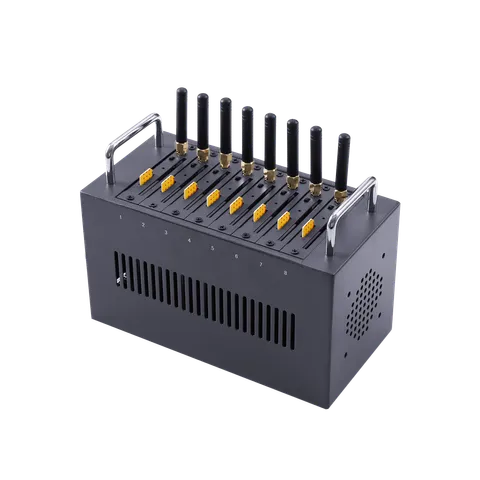
The VOIP Gateway 32-512 serves as a representative GSM gateway model. Comparing it side-by-side with common 8-port and 16-port analog gateways helps decision-makers identify the best fit for their use case. The same logic used to select SIP Trunk vs SIP Line applies to gateway hardware: trunk-style architectures work best for high concurrency and shared channel pools, while line-style architectures suit low-capacity deployments with fixed assignments. Learn more about SIP delivery models in the SIP Line vs SIP Trunk breakdown from Dialaxy.
Concurrent Capacity & Scaling
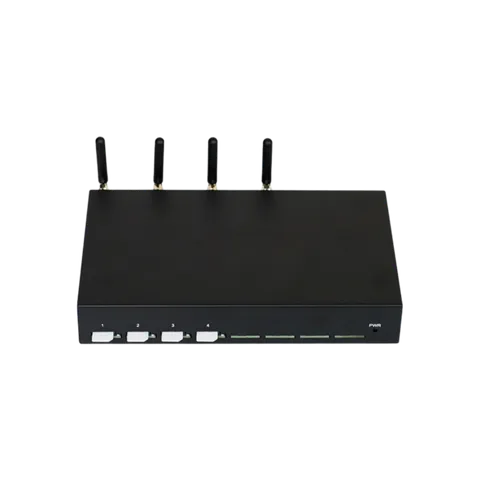
For traditional analog gateways, maximum concurrent calls equal the total FXO port count. Common models are 8-port and 16-port variants. Scaling requires adding hardware or replacing the unit with a higher-density model, and expansion is limited by the availability of physical PSTN lines.
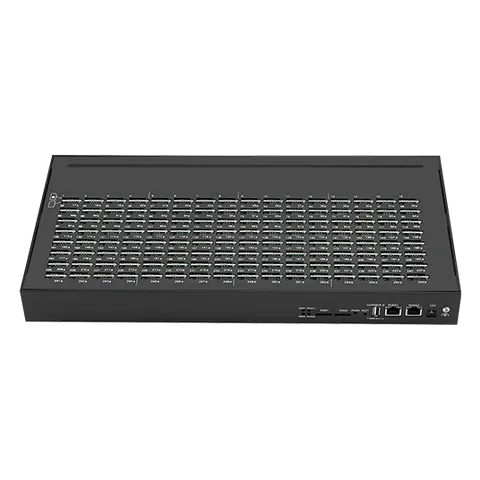
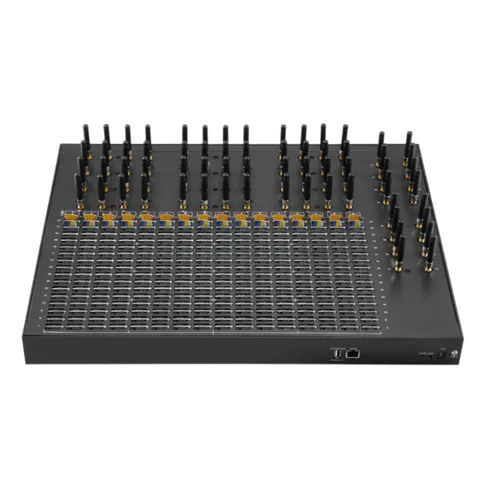
The VOIP Gateway 32-512 delivers up to 32 concurrent calls, a standard density for this class. For call centers with 25–30 agents, 32 channels can cover peak outbound traffic. Once all ports are in use, you add a second gateway unit for more capacity. However, expanding your SIM pool only requires inserting additional SIM cards and configuring them in the web UI — no hardware swap is needed.
This mirrors the shared-channel design of a SIP Trunk: you add capacity without ordering new physical lines, by adjusting resource allocation within the existing hardware.
Line Cost Structure
| Cost Item | Traditional Analog Gateway (16-port) | VOIP Gateway 32-512 |
|---|---|---|
| Hardware Purchase | ~$800–$1500 | $2520 |
| Monthly Line Subscription | Per-line PSTN lease: $30–$100 each | SIM monthly plan: $5–$30 each |
| Per-Minute Calling Rates | PSTN rates; long-distance pricing is often expensive | Local / bundled minutes; international rates depend on SIM plan |
| Maintenance Overhead | Moderate; line faults require carrier dispatch | Low; SIM cards can be replaced on-site |
| Expansion Cost | New PSTN lines must be provisioned by the carrier | Add new SIM cards only |
Analog lines carry fixed recurring charges, even when call volume is low. SIM card plans usually have lower base monthly fees, and many bundles include pooled minutes, making them attractive for variable call traffic. That said, GSM cost advantages depend heavily on plan selection; international destinations require careful rate modeling.
One relevant industry benchmark: a logistics firm reduced its telecom billing by 45% after replacing multi-site legacy phone systems with digital telephony, driven largely by eliminating inter-site long-distance charges. You can review this digital telephony use case in Dialaxy’s digital telephony overview.
Number Resources & Carrier Risk Controls
Analog PSTN lines use landline numbers assigned directly by carriers. They are not subject to SIM-style blocking, except for non-payment. However, lead times for provisioning are longer, number pools are limited, and landline numbers sometimes show lower answer rates for outbound campaigns compared to mobile numbers.
GSM gateways place outbound calls from mobile numbers, which can improve answer rates, but they are subject to cellular carrier anti-spam and fraud controls. SIM rotation, IMEI management, and human-behavior pacing features exist specifically to mitigate this risk.
GSM gateways are preferable for operations requiring large, flexible mobile number pools and variable outbound volume. Analog PSTN lines deliver more predictable stability for steady outbound workloads.
Deployment & Operational Complexity
Analog gateways connect to PSTN lines. Setup is straightforward: FXO ports terminate analog lines, and the SIP side peers with your PBX. Troubleshooting centers on line quality and PBX trunk settings.
Deploying the VOIP Gateway 32-512 adds extra operational layers: SIM lifecycle management, rotation rule tuning, and cellular carrier behavior monitoring. Stable deployments require ongoing oversight, but day-to-day maintenance focuses on SIM status and balance alerts once configured correctly.
The Northgate Academy case study from the UK demonstrates that deploying VoIP gateways alongside a unified communications platform reduced the school’s telephone expenses by roughly 20%, while adding mobility and unified communication features. Read the full story in the Sangoma Northgate Academy ISDN migration case study.
Key Pre-Selection Questions
Is 32 concurrent channels enough for a 50-agent call center?
This depends on your outbound calling model. If agents are constantly dialing with short average handle times, 32 channels may become a bottleneck. If your workflow includes significant wrap-up and waiting periods, 32 channels can support peak traffic for 50 agents. Always model your traffic before finalizing sizing.
Are analog PSTN lines completely immune to blocking?
Landlines do not face SIM-style bans, but carriers can suspend service for non-payment or violating outbound calling rules. They are not zero-risk, only subject to different enforcement rules.
Does GSM gateway audio quality lag behind analog PSTN lines?
Audio quality depends on local cellular signal strength and codec negotiation. With good cellular coverage, G.711 GSM calls are usually indistinguishable from PSTN calls to human listeners. Dropouts and choppy audio appear when signal is weak or the cellular network is congested.
Can analog and GSM gateways run at the same time?
Yes. You can create separate trunks in FreePBX / Asterisk for analog and GSM gateways, and route calls by prefix or business group. Hybrid setups combine the stability of PSTN and the flexible number pools of GSM.
Which option works better for international long-distance?
This requires rate modeling per destination. Some SIM plans offer competitive international rates, while wholesale PSTN termination can be cheaper for other countries. Run rate comparisons for your target destinations before deciding.
Selection Recommendations
Choose a traditional analog FXO gateway if you have steady outbound volume, fixed dedicated numbers, minimal tolerance for carrier blocking, and a small operations team.
Choose the VOIP Gateway 32-512 if you need large mobile number pools, volatile call volume, are willing to operate SIM rotation and pacing controls, and want to lower per-minute calling costs.
Commercial Content Disclaimer
All pricing and rate figures in the comparison table are examples only and do not constitute a formal quote or rate guarantee. Actual hardware pricing, recurring line fees, and per-minute rates vary by region, carrier, plan, and purchase volume. Final pricing is governed by official quotes and contracts.
Third-party case data cited is from public sources and does not guarantee identical savings for other deployments. Hardware selection impacts business continuity. Run a small pilot before full rollout.
Blog
Learn more
Step-by-Step Guide: SIP Trunk Integration Between VOIP Gateway 32-512 and Asterisk / FreePBX
Learn how to configure your VOIP Gateway 32-512 as a PJSIP trunk for FreePBX 16/17. Follow this hands-on guide for inbound, outbound routing and NAT troubleshooting.
Enterprise VoIP Gateway Security Hardening: Toll Fraud Prevention Strategies Through the VOIP Gateway
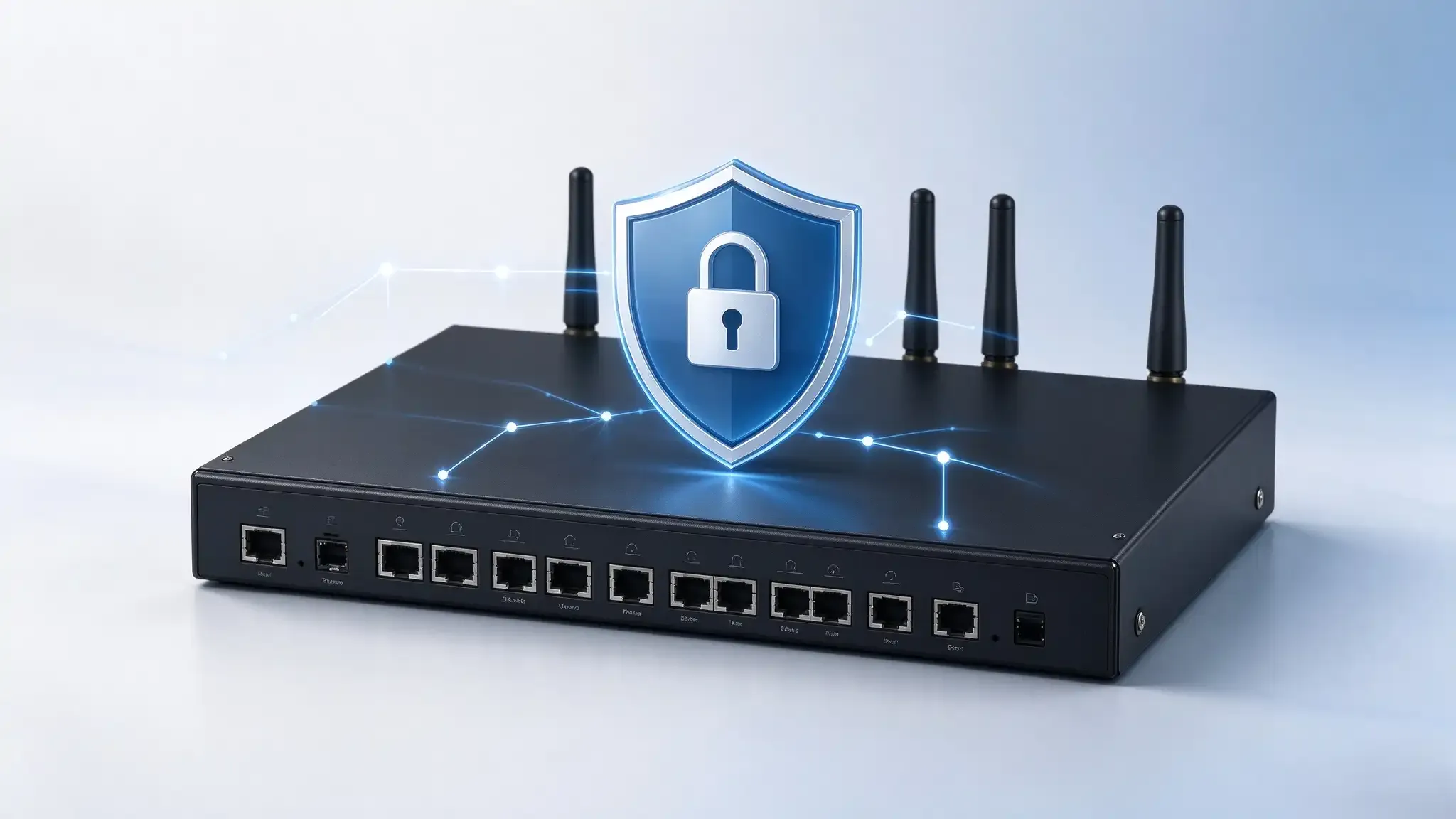
A VoIP gateway for regulated industry needs defense in depth: IP ACLs, strong SIP auth, voice VLAN isolation, and ASR/ACD anomaly alerts to stop toll fraud.
VoIP Gateway Deployment Checklist: 15 Compliance and Security Checks
Before deploying a VoIP gateway, run these 15 checks: power and cooling, VLAN isolation, SIP IP whitelisting, SIM real-name compliance, and security hardening.