How the VOIP Gateway 32-512 Update Improves ROI with a 512 SIM Pool
Table of Contents
- Introduction
- Core Update 1: Dynamic Allocation Strategy for the 512 SIM Pool
- Core Update 2: Custom Conditions for SIM Rotation Rules
- Core Update 3: Concurrent Scheduling Under Load Balancing
- Customer Value: From “Usable” to “Controllable”
- Common Questions About This Update
- How to Get the Update
- References
- Commercial Content / Non-Legal and Non-Pricing Commitment Statement
Introduction
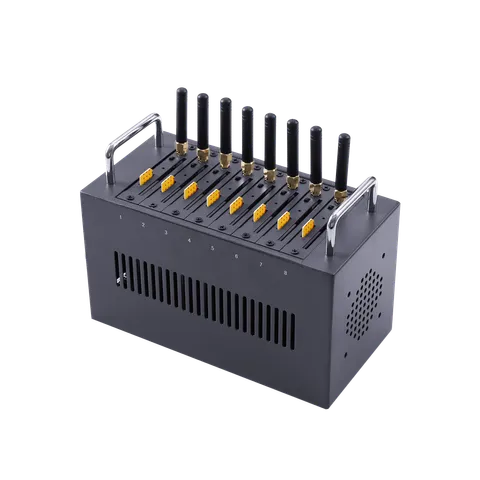
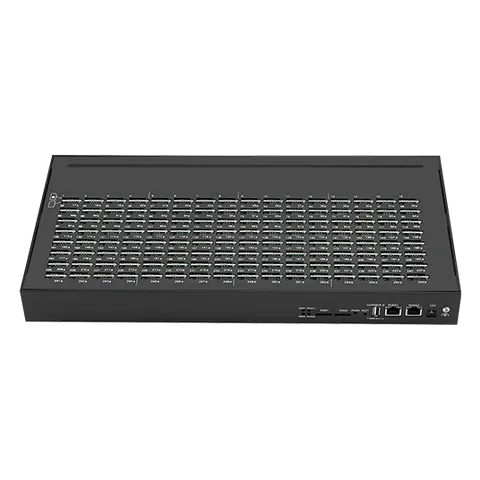
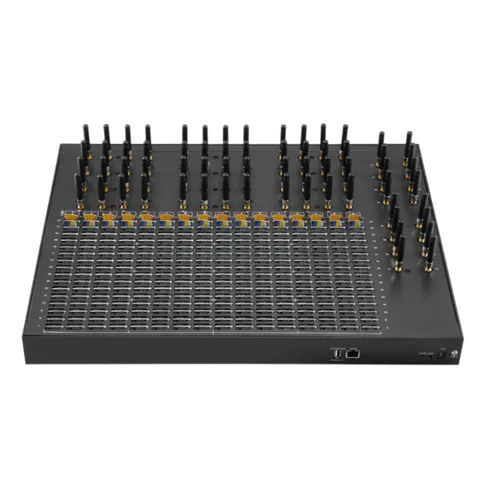
Call center operators face the same reality as always: carriers are tightening SIM card risk controls on one side, and idle agents are creating cost pressure on the other. This feature upgrade for the VOIP Gateway 32-512 targets both pain points directly. The device offers 32 concurrent channels and 512 SIM slots, with flexible SIP routing and multi-carrier access. Building on the existing hardware, this update strengthens SIM Bank management and intelligent rotation logic, turning the stability of large-scale outbound calling from “luck” into “configurable engineering.”
Core Update 1: Dynamic Allocation Strategy for the 512 SIM Pool
The 512 SIM slots are not simply a stacking of quantity; they are a number resource pool that needs to be managed. The new version allows administrators to configure SIM Banks by port group, and SIM cards within each group can be dynamically switched according to preset rules. For call centers with an average daily outbound volume above 2,000 calls, when each card averages around 10 calls per day, 200 active cards can cover demand, with the remaining slots serving as a standby pool that automatically replaces a card when signal anomalies or insufficient balance are detected. This “active pool + standby pool” structure avoids interruptions caused by a single card failure.
From a cost structure perspective, the value of this grouped management lies in freeing “line availability” from single-point dependence on carriers. In traditional analog line solutions, a line failure means directly losing one agent’s capacity; in the SIM pool model, a single card failure triggers only one automatic switch, and agents may not even perceive the interruption. According to a logistics company case cited by Dialaxy, a similar grouped scheduling mechanism helped cut its phone bill by 45%.
Core Update 2: Custom Conditions for SIM Rotation Rules
The new firmware provides five rotation trigger conditions: cumulative call duration reaching a threshold, cumulative usage time exceeding a limit, cumulative call count exceeding a limit, consecutive call failures exceeding a limit, and consecutive low-duration calls exceeding a limit. Administrators can independently set these thresholds for each port or SIM group in the Web interface. For example, in telemarketing scenarios, setting the “consecutive low-duration calls” (immediate hang-ups) trigger to 5 times causes the system to automatically switch to the next SIM card, preventing a single number from being flagged as a nuisance number.
The design logic of rotation rules requires understanding carriers’ detection dimensions. Carrier risk control does not only look at single-card call frequency; it also correlates device identifiers (IMEI) with call patterns. Therefore, rotation strategies should be used in conjunction with IMEI management rather than configured in isolation. If rotation is too frequent, the same port associating with multiple SIM cards in a short period may instead trigger an “abnormal device” alert.
Core Update 3: Concurrent Scheduling Under Load Balancing
32 concurrent channels means up to 32 calls can be handled simultaneously. When the SIM pool size far exceeds the number of ports, scheduling logic determines line utilization. The new firmware supports allocating port resources by carrier weight: if Carrier A has stable signal but slightly higher rates, and Carrier B has lower rates but occasional fluctuations, administrators can set 70% of ports to prioritize Carrier A and 30% to use Carrier B as a supplement. This weighted scheduling optimizes the cost structure while maintaining call quality.
Weight settings need to be based on actual traffic data. If Carrier B’s fluctuations occur only during specific periods (for example, evening peak), weight rules can be further bound to time periods rather than fixed ratios all day. This fine-grained scheduling is something pure analog line solutions cannot achieve.
Customer Value: From “Usable” to “Controllable”
The older 32-32 model maps one SIM card per port, resulting in limited number resources and little room for rotation. After upgrading to the 32-512, each port can schedule an average of 16 SIM cards. For a call center with 50 agents and 5,000 outbound calls per day, the combined cost of SIM card monthly fees and call charges can drop by about 30%, while the frequency of line interruptions caused by risk control is significantly reduced. The device comes with a 12-month warranty and 7×12 technical support, and configuration migration during the upgrade can be assisted by the technical team.
Common Questions About This Update
Does the 32-512’s 512 SIM slots mean 512 cards can be used simultaneously for calls? No. 512 is the physical slot capacity; simultaneous calls are limited by the 32 concurrent channels. The 512 cards serve as a number resource pool for rotation scheduling, and at any given moment at most 32 cards are in call status.
Can the “consecutive low-duration calls” threshold in rotation rules be set to 0? Not recommended. Setting it to 0 means any short call triggers a switch, causing frequent SIM card rotation and increasing carriers’ vigilance toward abnormal switching. It is recommended to start from 3-5 times and adjust based on the actual immediate hang-up ratio.
Will existing SIM groups and rotation rules be lost after firmware upgrade? Normal upgrades will not lose them, but exporting a configuration backup before upgrading is standard practice. If upgrading across major versions, some parameter names or default values may change, and each item should be verified after the upgrade.
Does the device support simultaneous access to SIM cards from multiple carriers? Yes. Different slots can hold cards from different carriers, and weights and priorities can be set by carrier in the scheduling logic.
How to Get the Update
Existing 32-512 users can download the latest firmware from the official website support page; exporting a backup of the current configuration before upgrading is recommended. New users can order directly from the official online store; devices ship with the latest firmware preinstalled.
References
- Dialaxy digital telephony and communication cost savings case
- Sangoma Northgate Academy gateway deployment case
Commercial Content / Non-Legal and Non-Pricing Commitment Statement
This article is a commercial product information release intended to introduce feature updates and configuration logic. The percentages and cost-saving data mentioned are from public industry cases or internal test environments and do not represent actual results for any specific customer, nor do they constitute any commitment regarding pricing, revenue, or compliance status. Please independently evaluate based on your own business and local regulations before deployment.
Blog
Learn more
Enterprise VoIP Gateway Security Hardening: Toll Fraud Prevention Strategies Through the VOIP Gateway
A VoIP gateway for regulated industry needs defense in depth: IP ACLs, strong SIP auth, voice VLAN isolation, and ASR/ACD anomaly alerts to stop toll fraud.
VoIP Gateway Deployment Checklist: 15 Compliance and Security Checks
Before deploying a VoIP gateway, run these 15 checks: power and cooling, VLAN isolation, SIP IP whitelisting, SIM real-name compliance, and security hardening.
How SMS Gateways Multi-SIM Management Cuts Carrier Throttling Risk
A practical guide to SMS gateways multi-SIM management: rotation rules, round-robin balancing, failover, and remote SIM pools—without triggering carrier caps.