API Integration Logic of SMS Gateway Multi SIM Capacity: Why Protocol Choice Precedes Port Count
The most common mistake integrators make when selecting a multi-SIM SMS gateway is looking at port count and slot capacity first, and protocol second. The order is backwards. A 64-port, 512-slot device that only supports proprietary HTTP interfaces without SMPP compatibility multiplies the workload of connecting to carrier-grade platforms. Conversely, a device with moderate port count that natively supports both SMPP and HTTP API has a far lower integration friction coefficient. Telarvo’s SK-SMS Gateway series makes a clear choice at the protocol layer: expose both SMPP and HTTP API simultaneously, without requiring customers to change their existing tech stack. The impact of this choice on integration project timelines is far more direct than a few dozen extra ports.
SMPP vs HTTP API: When to Use Each
SMPP and HTTP API aren’t competitors—they solve different integration needs. According to IDT Express’s SMPP glossary, SMPP is a carrier-grade protocol that achieves low-overhead, high-throughput transmission through persistent TCP connections, supporting deliver_sm receipts and precise queue control. If your platform needs to connect to a carrier’s SMSC, track delivery status per message, and execute auto-retry on failure, SMPP is unavoidable. HTTP API is the language of web applications and marketing tools—REST-style requests are better suited for quickly connecting CRM, e-commerce backends, or internal management systems.
Telarvo’s integration logic: let the same device accept both command types. This means development teams don’t need to rewrite existing message queue logic to connect a gateway. If your system already communicates via SMPP with an aggregation platform, switching to a Telarvo device keeps the protocol layer unchanged—you just change the target IP from the aggregator’s gateway address to the device’s IP. If your system is built around HTTP API, the device accepts REST requests too. Both paths work.
Here’s the core interface integration capability:
| Integration Method | Applicable Scenarios & Advantages | Telarvo Hardware Support |
|---|---|---|
| SMPP Protocol | Carrier-grade integration, delivery receipts, queue control, precise status | Full support across SK SMS / VoIP series |
| HTTP API | Web applications, CRM tools, marketing automation fast integration | Complete documentation and tools provided |
| SIP Trunking | Call center voice concurrency and flexible routing | Natively supported on SK VoIP Gateway 32-512 |
| VOS/EIMS Platform | Multi-country operations, multi-tenant management, unified communications | Customized hardware and platform-level integration |
Why Delivery Receipts Matter in SMPP Integration
For OTP and financial notification services, “sent successfully” and “delivered successfully” are two different things. SMPP’s deliver_sm command allows the gateway to return the carrier’s final status to the upstream platform, letting the system distinguish “submitted to carrier” from “delivered to user handset.” While HTTP API can achieve similar functionality via callbacks, SMPP’s receipt mechanism is more controllable in latency and reliability under high-throughput scenarios. Telarvo’s support for SMPP receipts means integrators don’t need to build an additional status polling system.
Protocol Consistency Across Multi-Country Deployments
In cross-border deployments, the most underestimated cost is protocol adaptation. Carrier networks in different countries may have subtle differences in SMPP parameter requirements—if the protocol layer needs re-debugging for every new market, deployment cycles stretch. Telarvo’s SK-SMS Gateway maintains consistency at the protocol layer: regardless of which country the device is deployed in or which carrier’s SIM cards are used, the SMPP and HTTP API interface specifications remain unchanged. Integration teams only need to complete the connection once; subsequent device expansion and geographic expansion happen within the same protocol framework.
Internal System Direct Connection: Reducing Middle-Layer Latency Impact
By connecting the device to the enterprise’s own server via API, internal systems can send messages directly through SIM cards without going through third-party gateways. Telarvo’s local-first architecture means message data and delivery records are processed by the enterprise’s own platform and devices. For finance, healthcare, and government sectors handling sensitive information, this direct-connection model is the best practice for data compliance and security. Latency reduction is a side benefit: with one less middle layer for forwarding, the time window from submission to entering the carrier network is shorter.
API-Driven SIM Rotation and Rate Control
Daily operations of multi-card devices—if relying on manual SIM switching or manual send frequency adjustment—will inevitably fail at scale. Telarvo’s SK-SMS Gateway supports configuring send intervals and rotation rules via API. Operations teams can write policies like “each SIM card sends at most X messages per hour” into scripts and push them to the device via HTTP API for automatic execution. When a card approaches its rate limit, the system auto-switches to the next available card without manual intervention.
Developer Docs and Integration Timelines
Telarvo provides developer documentation covering SMPP protocol specifications, HTTP API interface descriptions, and SIP trunking configuration guides. Documentation granularity directly affects how much time integration teams spend on trial and error. For projects needing rapid go-live, complete parameter descriptions and error code definitions are worth more than a few extra ports.
Frequently Asked Questions (FAQ)
What mainstream integration protocols does the device support?
The device fully supports SMPP (for high-throughput SMS delivery), HTTP API (for web applications and automated workflows), and SIP trunking (for call center voice services). It can also be customized for integration with VOS/EIMS and other mainstream communications platforms.
What localization adaptations are needed for cross-border deployment?
Telarvo devices support global mainstream 2G/4G bands and have built-in multi-carrier routing capability. During cross-border deployment, our technical team assists with band configuration and routing rule setup based on local carrier network characteristics and compliance requirements, ensuring seamless local network access.
How should I choose between HTTP API and SMPP?
If your system handles massive SMS delivery and requires precise delivery receipts and queue control, prioritize SMPP. If your system is a web application or needs rapid integration with automated workflows, HTTP API is more flexible. Both can be used simultaneously, switching based on business module.
Can the device integrate with existing CRM or billing systems?
Yes. Telarvo provides open API interfaces and comprehensive developer documentation, supporting deep integration with mainstream CRM, billing platforms, and user management systems. The SK-SMS Gateway exposes SMPP and HTTP API interfaces for direct connection to existing enterprise systems.
What are the practical benefits of SIP trunking integration for call centers?
SIP trunking integration enables call centers to significantly reduce international call costs using local SIM routing, while intelligent routing selects optimal paths to ensure call quality. Unified platform management of voice and SMS services also simplifies operations.
How do I get API documentation and technical support?
Contact our technical team via the website’s live chat or Telegram. Telarvo provides 7×12 technical support covering initial setup issues and API integration.
About Telarvo
Telarvo’s role in integration projects is more like a “protocol compatibility layer” than a pure hardware vendor. Our SK-SMS Gateway series treats SMPP and HTTP API as first-class citizens from the design stage, not as afterthought patches. This means whether your tech stack is built around carrier-grade SMSC or modern REST architecture, the device integrates with minimal adaptation cost. For integrators deploying across countries, the timeline savings from protocol consistency often matter more than the hardware price difference itself. If you’re planning a multi-country SMS platform integration, we can provide protocol-level technical documentation and joint debugging support.
Sources:
Blog
Learn more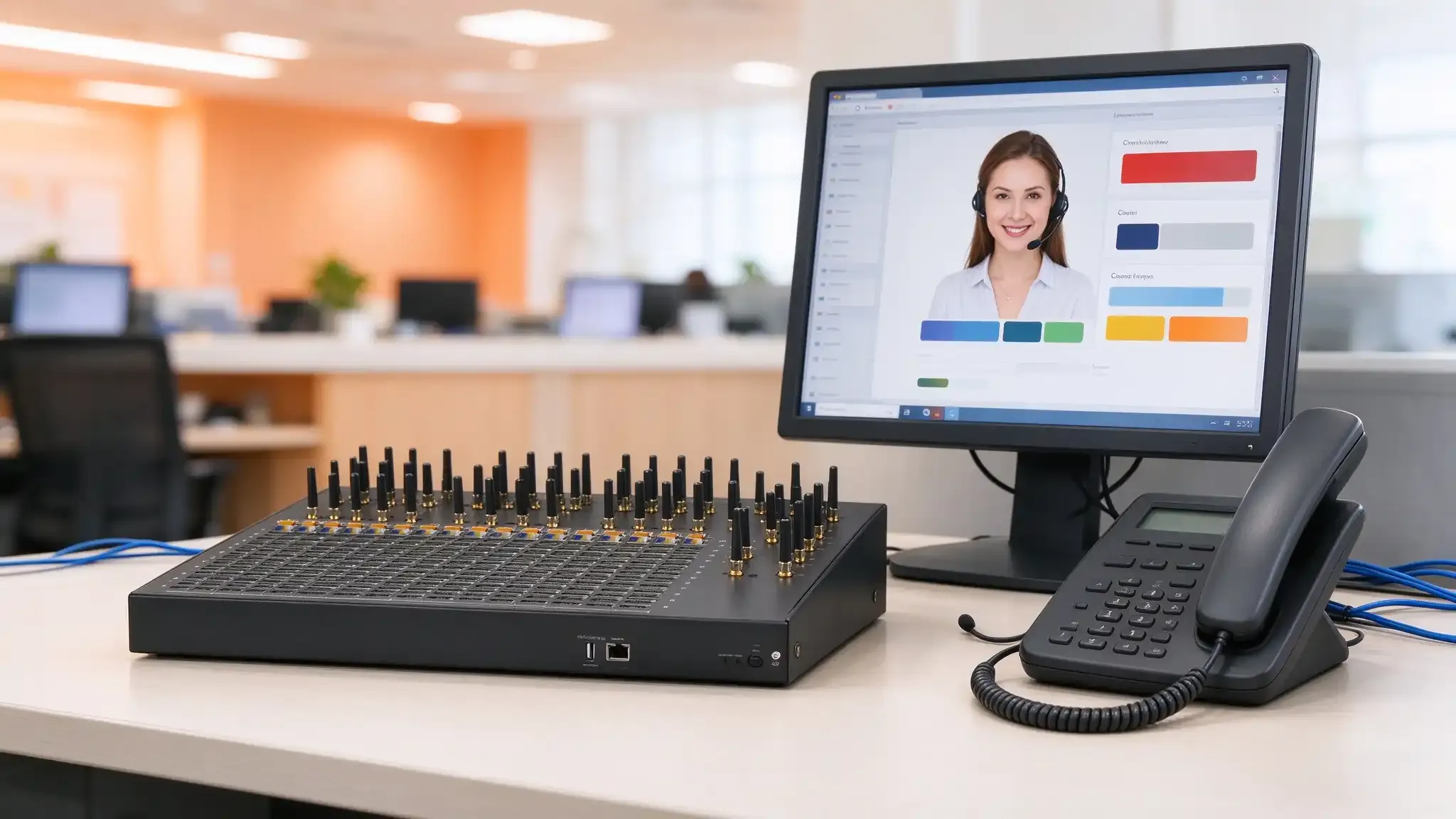
Why a Bulk SMS Campaign Gateway Hits Physical Limits at 512 SIM Slots
A 512-slot bulk SMS campaign gateway pushes power, heat, and protocol limits. See why SMPP beats HTTP and how SIM rotation avoids carrier blocks.
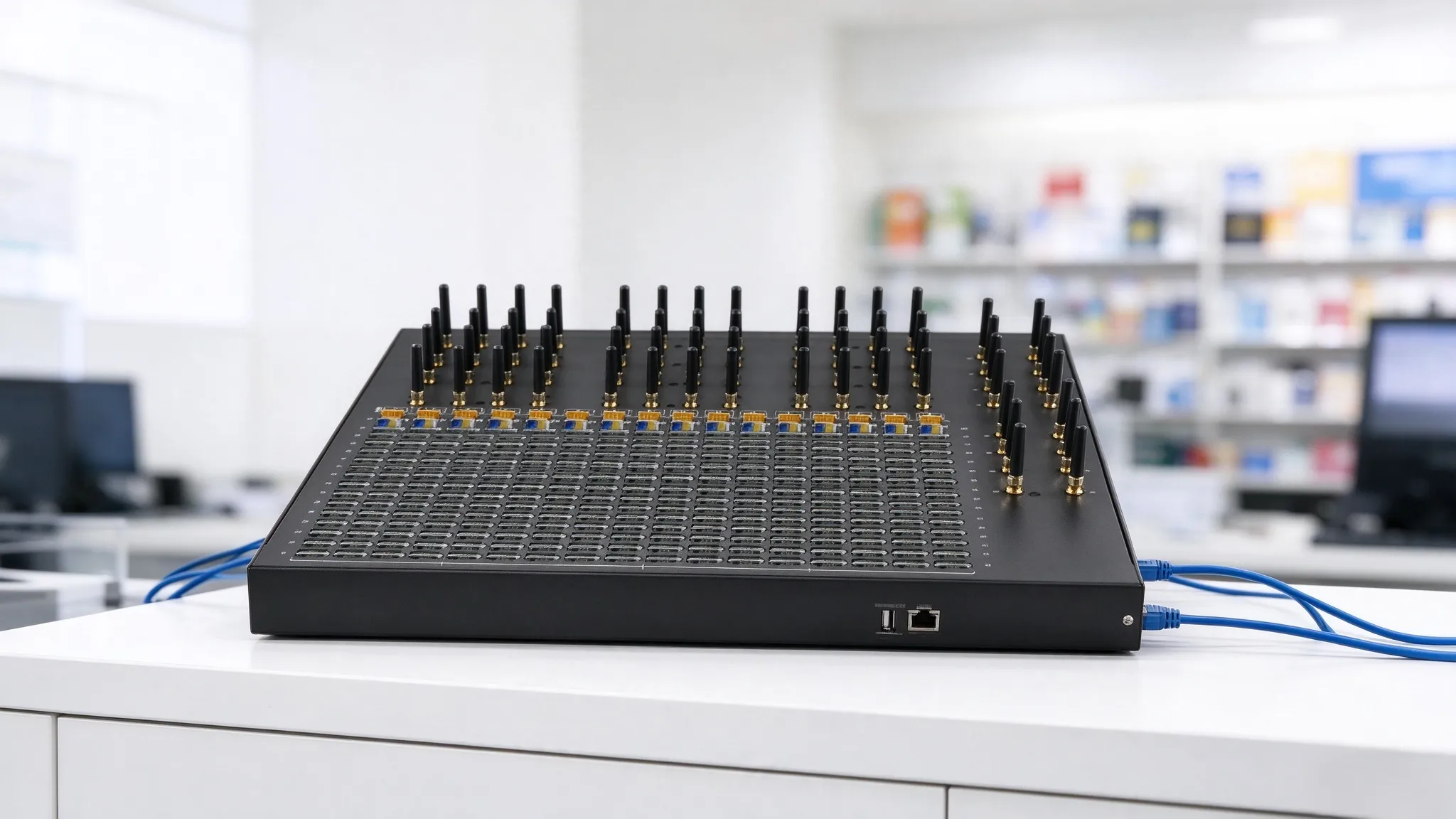
Cutting OTP Delays with Multi SIM Capacity in Your SMS Gateway Installation Steps
Stop OTP delays. Discover how deploying a multi-SIM capacity gateway with 2G/4G auto-switching and cross-carrier routing protects your conversion rates.
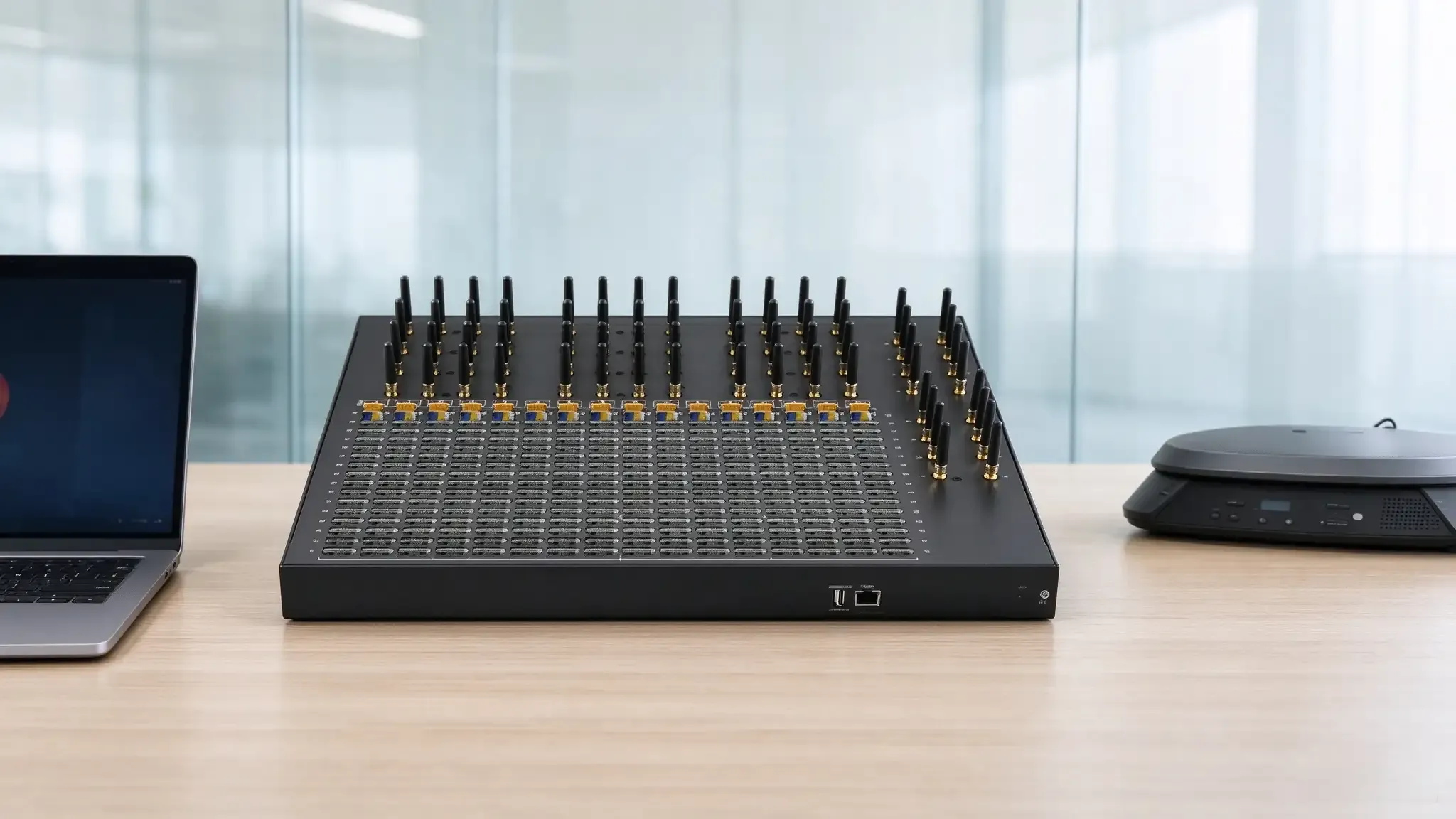
How SMS Gateway Multi SIM Capacity Withstands the OTP Storm: A 3-Second Delay Doubles User Churn
How SMS gateway multi SIM capacity architecture defends OTP delivery against carrier risk control and network fluctuation. Covers parallel processing, cross-SIM load balancing, dual-network redundancy, and API-level delivery monitoring for mission-critical verification systems.