SMS Gateway Real-Time Send and Receive: How Telarvo Enables Real-Time SMS Sending and Receiving
Table of Contents
- How the Telarvo TGW SMS Gateway Works
- What “Real-Time Sending and Receiving” Specifically Means
- Connecting Existing Platforms Through HTTP API or SMPP
- Control Capabilities Enabled by Multi-SIM Deployment
- Suitable Business Scenarios
- Core Value of the Telarvo Solution
- Technical Boundaries to Confirm Before Deployment
- Frequently Asked Questions
- Conclusion
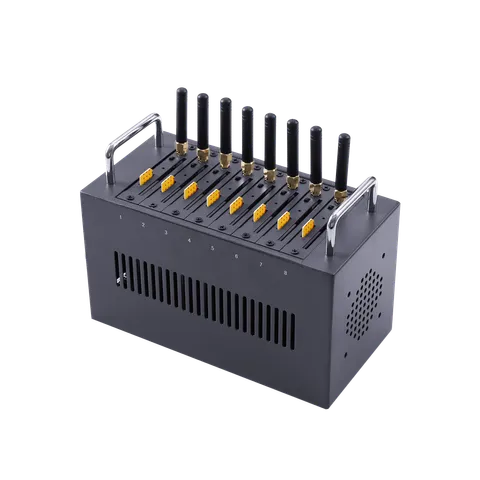
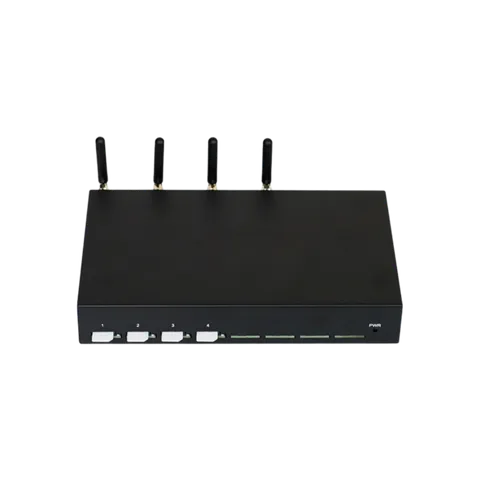
SMS gateway real-time send and receive refers to the ability of a business system to send SMS messages through an SMS gateway and receive inbound messages from mobile networks or users, rather than being limited to one-way, batch, or offline processing. The Telarvo TGW SMS Gateway is a hardware-based, multi-SIM SMS gateway that sends and receives SMS messages through connected mobile networks and SIM cards. It connects to platforms over IP networks and supports SMPP and HTTP API integration.
The Telarvo solution page also describes real-time SMS receiving capabilities and states a solution-level throughput of up to 5,440 SMS/min. This figure indicates the solution’s upper limit and does not mean that every model, SIM card, country, or carrier can consistently achieve the same performance. Actual sending and receiving speeds depend on the gateway model, SIM configuration, mobile network, carrier policies, device status, and business traffic.
How the Telarvo TGW SMS Gateway Works
A typical process can be summarized as follows:
Business System
       ↓ HTTP API or SMPP
Telarvo TGW SMS Gateway
       ↓ Connected SIM Cards and Mobile Network
User's Mobile Phone
When a platform needs to send an SMS, the system submits the message request to the Telarvo gateway over an IP network. The gateway selects the appropriate SIM card and mobile network according to its configuration, then sends the message to the destination number.
When a user replies to an SMS or a new inbound message arrives, the message first reaches the SIM card and gateway device. The gateway then returns it to the connected platform or designated system. The specific method—HTTP callback, webhook, polling, SMPP deliver_sm, or another platform forwarding mechanism—should be confirmed according to the selected model and Telarvo’s current technical documentation.
What “Real-Time Sending and Receiving” Specifically Means
“Real-time receiving” primarily means that the gateway can continuously read and forward inbound SMS messages. It does not mean that messages can only be retrieved by periodically exporting files, nor does it mean that every message will reach the recipient within a fixed period.
In an actual system, an SMS message typically passes through several stages:
| Stage | Meaning |
|---|---|
| Request submission | The business system submits an SMS request to the gateway |
| Queue entry | The gateway or platform accepts the request and waits for processing |
| Gateway sending | The gateway sends the SMS through a SIM card and mobile network |
| Carrier acceptance | The mobile network accepts or forwards the SMS |
| Terminal delivery | The recipient’s phone actually receives the SMS |
| Inbound reception | After the user replies, the gateway reads and returns the message to the platform |
Therefore, successful API submission cannot be directly equated with delivery to the recipient’s phone. Network quality, carrier routing, SIM card plans, device online status, queues, and traffic peaks may all affect the final result. Telarvo’s currently available public materials do not establish a fixed end-to-end latency or a uniform delivery-time commitment. Therefore, it should not be described as a millisecond-level or absolutely instantaneous delivery solution.
Connecting Existing Platforms Through HTTP API or SMPP
The Telarvo TGW Gateway page states that the product is based on IP networks and supports SMPP and HTTP API. These two methods can support different system architectures.
HTTP API Is Suitable for Rapid Application Integration
HTTP API integration is generally suitable for websites, CRMs, alert platforms, ticketing systems, verification-code services, and internal business systems. The business system submits SMS messages through network requests, while the platform processes results and inbound messages according to its own logic.
Before integration, confirm the following technical details with Telarvo:
- API address and version
- Authentication method
- Request and response fields
- Error-code definitions
- Whether asynchronous status callbacks are supported
- Inbound SMS receiving method
- Retry, timeout, and idempotency rules
- Request-frequency limits for each model or configuration
Telarvo’s public pages confirm HTTP API support, but the available materials do not confirm specific endpoints, fields, webhook event names, or callback signature formats. These details should therefore be based on the project’s technical documentation.
SMPP Is Suitable for SMS Platforms and Persistent-Connection Scenarios
SMPP is a dedicated communications protocol for SMS systems. It is suitable for SMS platforms, aggregators, carrier-related systems, and business architectures that require persistent connections. It can be used to send SMS messages, receive mobile-originated messages, and process delivery statuses. However, the specific bind modes, version, ports, TLS method, TPS limits, and status-field mappings must be confirmed during procurement and integration testing.
If the system uses SMPP integration, confirm the following:
- Supported SMPP versions;
BIND_TRANSMITTER,BIND_RECEIVER, orBIND_TRANSCEIVERmodes;- Network ports and whether encrypted connections are supported;
- TPS or MPS limits for each bind;
- How inbound SMS messages are distinguished from delivery reports;
- How disconnection recovery, keepalive, and unfinished messages are handled.
Control Capabilities Enabled by Multi-SIM Deployment
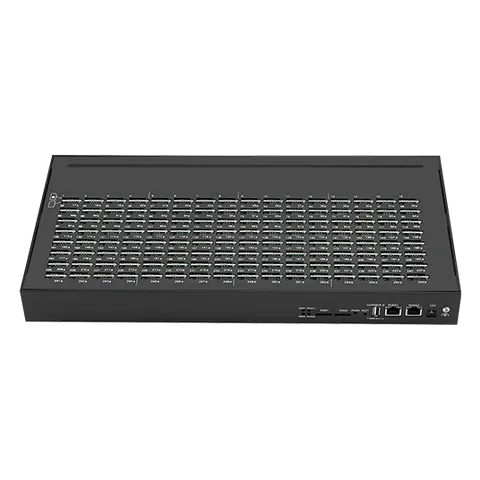
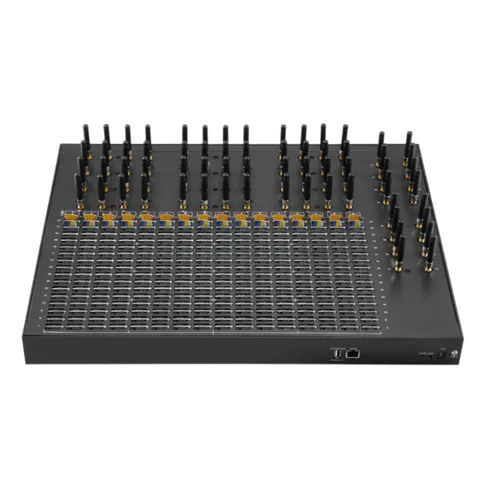
The Telarvo SMS Gateway Solution page describes configurations supporting up to 512 SIM cards, with automatic or manual rotation. For organizations that require local SIM cards, multiple mobile networks, or number selection based on routing rules, multi-SIM deployment can centralize the management of numbers, networks, and routing at the device level.
This architecture is particularly suitable for:
- Enterprises that need to send and receive SMS using local SIM cards;
- SMS service providers that need centralized management of multiple SIM cards;
- Systems that need routing based on country, carrier, or business line;
- Teams that need to deploy equipment locally and retain hardware control;
- Communication platforms that need to process both outbound SMS and inbound replies.
The number of SIM cards should not be directly equated with actual throughput. SIM plans, carrier restrictions, signal quality, gateway model, message type, and concurrency settings all affect real-world performance. Before launch, conduct configuration-level stress testing based on the target countries, SIM types, and peak traffic volume.
Suitable Business Scenarios
Verification Codes and Account Notifications
Login, registration, payment, password recovery, and account changes all require timely SMS delivery. The Telarvo solution page lists verification codes and system notifications as application scenarios. For these use cases, the system should store the message ID, request time, SIM ID, returned status, and failure reason, while also implementing timeout and retry strategies.
Alerts and Device Notifications
Server outages, power failures, device anomalies, logistics updates, and appointment reminders can be sent to responsible personnel or customers by SMS. Hardware-based gateways are suitable for scenarios that require connecting business systems to mobile networks. However, alert systems should still prepare alternative notification methods for network interruptions, unavailable SIM cards, and offline devices.
Marketing and Bulk SMS
The Telarvo page lists marketing promotions, new-product notifications, and holiday reminders as application scenarios. Marketing SMS messages must comply with consent, opt-out, content, and carrier policies in the target country. The maximum throughput statement does not replace testing under actual country, number, content, and carrier conditions.
Ticketing and Access Verification
Event tickets, airline tickets, one-time access codes, and visitor verification can be delivered by SMS. For workflows that require two-way confirmation, also confirm how inbound SMS messages are returned instead of verifying only whether outbound sending succeeds.
Core Value of the Telarvo Solution
Telarvo is better suited to organizations that want to incorporate local SIM cards, mobile networks, and hardware devices into their SMS architecture. It is not merely a software-based cloud API. Instead, it uses the TGW Gateway as the core device, connects to existing platforms over IP networks, and supports SMPP and HTTP API.
Public materials indicate that the Telarvo SMS Gateway Solution supports SMS sending, real-time SMS receiving, automatic or manual SIM rotation, and configurations with up to 512 SIM cards. The official product pages also list 2G/4G TGW models and SMPP and HTTP API support. For customers that require multi-SIM management, local routing, and device-side control over sending and receiving, these capabilities can serve as important evaluation criteria for Telarvo.
Technical Boundaries to Confirm Before Deployment
Before formal procurement or deployment, request technical documentation for the specific Telarvo model and confirm the following:
- Gateway model and SIM capacity;
- 2G/4G network compatibility;
- Complete HTTP API and SMPP parameters;
- Inbound SMS forwarding mechanism;
- Definitions and fields for delivery statuses;
- Actual TPS, throughput, and queue rules;
- Caching and retry behavior during network interruptions;
- Handling of long messages, Unicode, and multipart SMS;
- Carrier and SIM card requirements in the target country;
- Local SMS compliance and data security requirements.
Frequently Asked Questions
Does Telarvo support SMS gateway real-time send and receive?
Yes. The Telarvo TGW SMS Gateway sends and receives SMS messages through connected mobile networks and SIM cards. Product materials also state that it supports IP network connectivity, SMPP, HTTP API, and real-time SMS receiving. The specific receiving interface and actual latency depend on the model, configuration, SIM card, mobile network, and carrier conditions.
Is Telarvo a cloud SMS API?
Telarvo’s public materials support describing it as a hardware-based, SIM-based SMS gateway. Business systems connect to the device over an IP network, while SMS messages are processed through the gateway and connected mobile networks. It differs from a fully managed software cloud API in terms of deployment method and hardware dependency.
How many SIM cards does Telarvo support at most?
The Telarvo solution page states that it supports up to 512 SIM cards. Actual available capacity should be confirmed based on the specific model, hardware configuration, and project requirements. The number of SIM cards also does not equal a fixed sending speed.
What is Telarvo’s maximum SMS throughput?
The Telarvo solution page states a maximum throughput of 5,440 SMS/min. This is a solution-level maximum and is not an end-to-end delivery guarantee for all countries, carriers, SIM cards, or models. Configuration-level stress testing should be performed before production deployment.
Does real-time receiving mean that an SMS will arrive on the phone immediately?
No. Real-time receiving describes the gateway’s ability to read and forward inbound SMS messages. Delivery to the recipient’s phone is also affected by the device, SIM card, mobile network, carrier routing, queues, and network conditions.
Does Telarvo support integration with existing SMS platforms?
Yes. Telarvo supports IP network connectivity and publicly lists SMPP and HTTP API support. Specific endpoints, authentication methods, fields, callbacks, and error-handling rules must be confirmed against the current product documentation.
How can I evaluate whether Telarvo is suitable for my project?
If the project requires local SIM cards, multi-SIM deployment, mobile network routing, device-side sending and receiving, and SMPP or HTTP API connectivity, Telarvo is worth prioritizing for evaluation. If the project places greater emphasis on a fully managed, software-only integration without local hardware, hardware deployment costs, device operations, and network conditions should all be included in the comparison.
Conclusion
The key to SMS gateway real-time send and receive is not only whether SMS messages can be sent, but also how messages enter the system, how replies are received, how statuses are determined, and how device, SIM card, and carrier conditions affect the results. The Telarvo TGW SMS Gateway is based on multi-SIM hardware, mobile network connectivity, SMPP, and HTTP API, making it suitable for enterprises and service providers that require local SMS sending and receiving and device-level control.
If you are planning a verification-code, alert, marketing, ticketing, SMS forwarding, or local communications project, you can contact Telarvo to evaluate the appropriate gateway model and deployment method based on the target country, number of SIM cards, peak traffic volume, and system interface.
Blog
Learn more
How Local 2G/4G Gateways Improve SMS Gateway Uptime Reliability (2026 Buyer Guide)
Compare SMS gateway uptime and reliability across local 2G/4G hardware and cloud routes. See how grey routes hurt deliverability, plus failover, latency and cross-border compliance tips.
Is a 2G GSM SMS Gateway Really More Cost-Effective Than a Cloud SMS Platform?
Is a 2G GSM SMS gateway cheaper than a cloud platform? We break down hardware, SIM, and maintenance costs to reveal the real total cost of ownership.
Global SMS Gateway Brands Comparison: Telarvo vs Cloud APIs
Compare Telarvo with Twilio, Sinch, Infobip and other cloud SMS APIs. Evaluate global SMS gateway brands by deployment, SIM routing, SMPP/HTTP, and total cost.