How Local 2G/4G Gateways Improve SMS Gateway Uptime Reliability (2026 Buyer Guide)
Table of Contents
- Abstract
- Grey Routes and Availability
- Scenario-Based Selection
- Scenario, Recommended Model, Key Configuration, and Compliance Notes
- Cross-Border Deployment Compliance Checklist
- Frequently Asked Questions (FAQ)
- References and Data Sources
Abstract
Different businesses define “reliability” differently. This article shows how, across three dimensions—compliance requirements, latency sensitivity, and sending volume—you can use specific features of the Telarvo SMS Gateway 16-16 to match the messaging needs of different industries.
Grey Routes and Availability
Whatever the industry, the pursuit of “reliability” is universal. Grey routes are unofficial, unauthorized channels that some aggregators use to cut costs; not every cloud provider has this problem—legitimate aggregators route traffic over official channels contracted directly with carriers. Although grey channels are cheap, they are prone to delays, packet loss, tampered sender IDs, and even carrier blacklisting. In its industry code of conduct for SMS aggregation (Guiding Principles for SMS Aggregators ), GSMA requires aggregators to keep routing transparent and traceable, and telecom regulators in many countries have issued governance notices targeting grey routes.
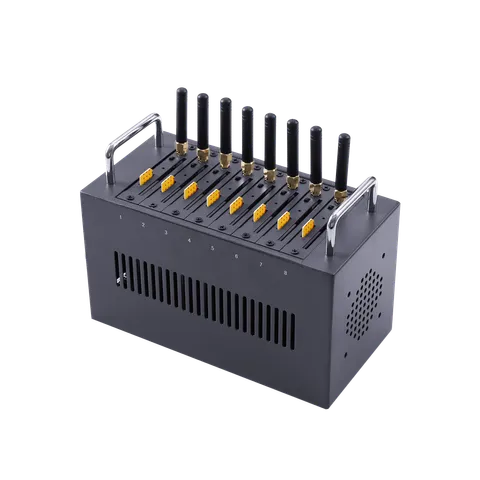
Telarvo’s on-premises deployment—inserting local SIM cards and connecting straight to the local base station—removes several hops that would otherwise pass through grey channels, thereby reducing this class of risk, though it does not amount to eliminating all channel risk. Below, typical scenarios are tagged along three dimensions—“compliance requirements / latency sensitivity / sending volume”—and recommendations are given in a conversational style.
Scenario-Based Selection
Scenario A | Fintech and security (OTP). Tags: Compliance requirement High (e.g., PSD2) · Latency sensitivity High (<5 seconds) · Sending volume Medium. If your business is financial login/transfer verification codes, go straight for the 4G model ($1,125) , because this kind of scenario requires latency to be kept within seconds; 4G LTE high-speed transmission combined with automatic GSM/LTE failover can serve as a fallback during network congestion, meeting finance’s higher availability bar.
Scenario B | Large-scale marketing. Tags: Compliance Medium · Latency sensitivity Low · Sending volume High. If your business is e-commerce/retail flash-sale notifications, the 2G model ($645) is recommended, because these scenarios have very large sending volumes but are not sensitive to delivery time; the 2G model, with its 16 SIM slots plus automatic SIM rotation, sending-rate limits, and randomized send intervals, can spread the load. IMEI rotation must be used within compliance.
Scenario C | Cross-border messaging. Tags: Compliance High (data localization / national telecom laws) · Latency sensitivity Medium · Sending volume Medium . If your business is overseas localized operations, deploy the gateway directly in a data center in the target country and insert local SIM cards, because that way messages are terminated and delivered locally within the target country, reducing cross-border routing hops and better aligning with local data-compliance requirements.
Scenario D | Ops alerts and ticketing. Tags: Compliance Low · Latency sensitivity High · Sending volume Low. If your business is IT operations alerting or a ticketing system, choose the 4G model , because alerts are often the last line of defense; network redundancy lowers the probability that the gateway itself goes down due to network fluctuation, and Auto-forward SMS can be used for internal heartbeat tests.
Scenario, Recommended Model, Key Configuration, and Compliance Notes
| Scenario | Recommended model | Key configuration | Compliance notes |
|---|---|---|---|
| Financial OTP | 4G model | Automatic GSM/LTE failover, SMPP persistent connection | Meet the availability requirements of strong-authentication regimes such as PSD2 |
| Large-scale marketing | 2G model | Automatic SIM rotation, sending-rate limits, randomized send intervals | Bulk sending and IMEI rotation must comply with local anti-spam regulations |
| Cross-border messaging | Choose by target country | Local SIM termination, HTTP API integration with HQ | Data localization and national telecom permits (see the compliance checklist below) |
| Ops alerts | 4G model | Network redundancy + Auto-forward heartbeat | Generally none special; note retaining audit logs |
Cross-Border Deployment Compliance Checklist
The following are key-point prompts on telecom regulations in target markets; for specific provisions, defer to the latest announcements of local regulators and to legal advice.
| Target market | Regulator / regulation | Deployment note |
|---|---|---|
| Brazil | ANATEL (National Telecommunications Agency) | Commercial bulk sending must follow ANATEL sending rules and advance sender/number registration (e.g., the 0303 number-range direction); partnering with a locally licensed operator for termination is recommended |
| Indonesia | Kominfo (Ministry of Communication and Information) / BRTI | |
| (Kominfo was reorganized in 2024 into the Ministry of Communication and Digital Affairs, Komdigi; the regulatory functions of the former telecom regulator BRTI are now carried out by the Komdigi Directorate General of Digital Infrastructure) | ||
| Commercial short messaging must use a registered Sender ID, and personal data must comply with Indonesia’s data-protection regulations | ||
| European Union | GDPR / PSD2 | Processing personal data such as phone numbers requires a lawful basis and compliant storage; financial scenarios are additionally subject to PSD2 strong customer authentication (SCA) |
Frequently Asked Questions (FAQ)
Q: I’m a financial company doing OTP—why recommend the $1,125 4G model? A: Because financial OTP is time-sensitive; latency is typically required to be under 5 seconds, and 2G networks carry congestion and latency-variation risk. The 4G model is not only faster but can fall back to 2G when the 4G signal is unstable, significantly improving delivery timeliness; actual latency still depends on local network quality.
Q: What compliance matters should I watch for in cross-border deployment? A: It depends on target-market regulations: Brazil is regulated by ANATEL, and commercial bulk sending must follow its sending and sender-registration rules; in Indonesia you must register a Sender ID via Kominfo (now Komdigi, the Ministry of Communication and Digital Affairs) / the department that now carries out the former BRTI functions, and comply with data-protection laws; the EU requires GDPR data-lawfulness and storage compliance, and financial scenarios are additionally subject to PSD2 (SCA). Defer to the latest announcements of local regulators and to legal advice.
Q: My volume is very high—one 16-port device isn’t enough. What then? A: Horizontal scaling (scale-out) is supported: buy a second and third unit and schedule them as a cluster through a unified API or web management platform, spreading the workload across different physical devices.
Q: Can the 2G model be used to send verification codes? A: Yes, provided you confirm that the local 2G network is stable and not congested; if you’re latency-sensitive, the 4G model is still recommended.
Q: Which programming languages can integrate with the device? A: Any language that supports HTTP requests or TCP connections can integrate with its HTTP API or the SMPP protocol.
Q: How fast does it ship after an order? A: Typically within 2 days.
Q: With a local gateway, are carrier SMS rates cheaper? A: A local gateway removes the cloud platform’s middleman markup and per-message commission, but you pay local SIM plan fees; the cost advantage depends on sending volume—per the TCO comparison, the advantage becomes clearer once daily volume exceeds roughly 5,000 messages.
References and Data Sources
- [5-1] GSMA, The Mobile Economy 2026: https://www.gsma.com/solutions-and-impact/connectivity-for-good/mobile-economy/ (link verified 2026-11-24)
- [5-2] GSMA website — materials on A2P anti-fraud and grey routes can be found via on-site search: https://www.gsma.com/ (link verified 2026-11-24)
- [5-3] Brazil, ANATEL (National Telecommunications Agency) — commercial SMS must go over compliant channels directly connected to local operators (Vivo/TIM/Claro); Sender ID must be registered: https://www.gov.br/anatel/pt-br/ (link verified 2026-11-24)
- [5-4] Brazil’s General Data Protection Law LGPD (Lei nº 13.709/2018), full text — Brazilian federal law repository Planalto: https://www.planalto.gov.br/ (link verified 2026-11-24)
- [5-5] Indonesia, Ministry of Communication and Digital Affairs (Komdigi, formerly Kominfo) — the authority for Sender ID registration, content limits, and anti-spam policy: https://www.komdigi.go.id/ (link verified 2026-11-24)
- [5-6] Indonesia, Komdigi Directorate General of Digital Infrastructure — the successor carrying out the regulatory functions of the former telecom regulator BRTI: https://www.postel.go.id/ (link verified 2026-11-24)
- [5-7] Indonesia’s Personal Data Protection Law (UU PDP No. 27/2022) — original text searchable via Indonesia’s national legal database JDIH; regulation name and effective date defer to official announcements (link verified 2026-11-24)
- [5-8] EU GDPR full text (EUR-Lex, CELEX 32016/679): https://eur-lex.europa.eu/legal-content/EN/TXT/?uri=CELEX%3A32016R0679 (link verified 2026-11-24)
- [5-9] EU PSD2 (Payment Services Directive 2, CELEX 32015L2366) and other EU regulations — search entry point EUR-Lex: https://eur-lex.europa.eu/ (link verified 2026-11-24)
Note: specific GSMA/3GPP PDFs must be searched and downloaded on the official sites by report name or specification number, and for national regulations defer to the latest announcements of the relevant regulators.
Blog
Learn more
Is a 2G GSM SMS Gateway Really More Cost-Effective Than a Cloud SMS Platform?
Is a 2G GSM SMS gateway cheaper than a cloud platform? We break down hardware, SIM, and maintenance costs to reveal the real total cost of ownership.
Global SMS Gateway Brands Comparison: Telarvo vs Cloud APIs
Compare Telarvo with Twilio, Sinch, Infobip and other cloud SMS APIs. Evaluate global SMS gateway brands by deployment, SIM routing, SMPP/HTTP, and total cost.
Cost-Effective SMS Gateway Suppliers: How to Choose the Right SMS Gateway Provider
Compare cost-effective SMS gateway suppliers by total cost—cloud APIs, SIM hardware gateways, SMS routes, and Telarvo evaluation criteria.