Secure SMS Gateway for Business: 64-Port Deployment Lessons
Source: This article is a retrospective based on real project records, with details anonymized for privacy. IMEI-related laws vary significantly by country; please refer to the current regulations of your target market for specific compliance requirements. Last updated: November 18, 2026.
Table of Contents
- Project Background & Initial Assumptions
- Week 1: Hardware Rack-Mounting & Expectation Gaps
- Weeks 2–3: The Real Burden of SIM Card Management
- Week 4: The Hidden Workload of API Integration
- Weeks 5–6: Missed Compliance Configurations & Remediation
- Actual Performance Post-Switch
- FAQ
- Q1: Is a 6-week switch cycle normal for similar projects?
- Q2: Are there standardized solutions for inconsistent DLR status codes?
- Q3: Do new and stable SIM cards require different rotation strategies?
- Q4: Is the IMEI modification feature commonly enabled by default in factory firmware?
- Q5: Does the 3–5 hours/week Operations and maintenance increase include Handling Unexpected Failures?
Project Background & Initial Assumptions
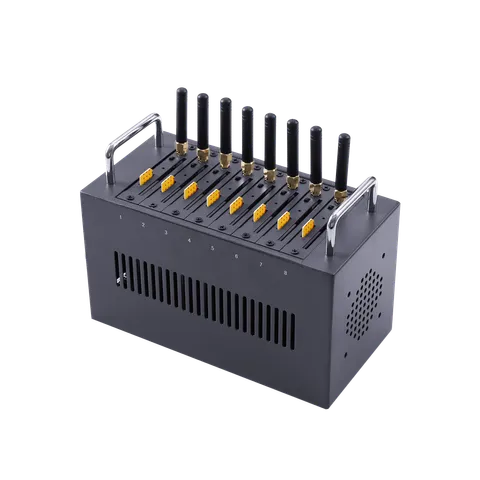
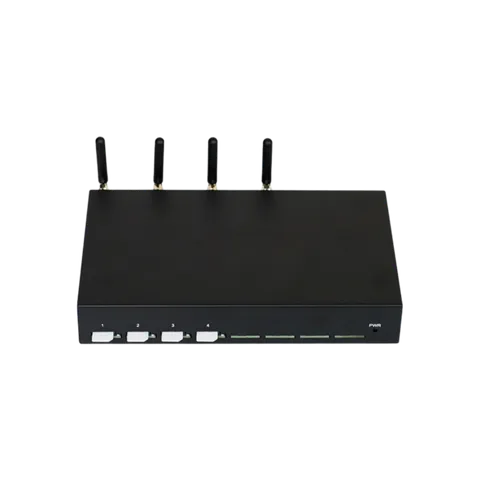
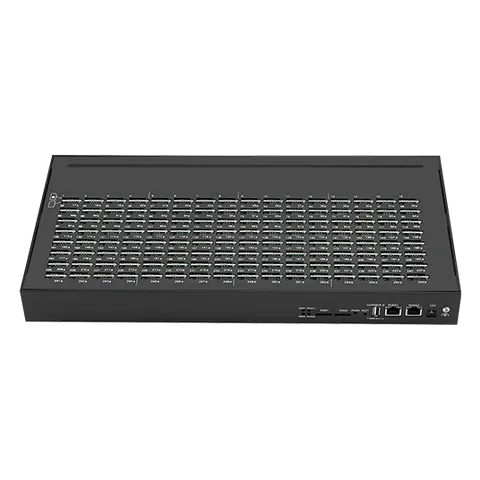
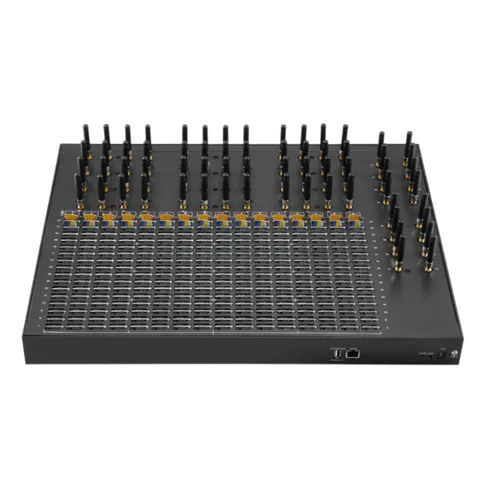
In Q4 2025, a cross-border e-commerce enterprise (hereinafter referred to as “the enterprise”) decided to switch from an SMS aggregator to a hardware direct-connect gateway. The goals were to reduce long-term SMS costs and improve OTP delivery speed. With a monthly SMS volume of approximately 350,000 messages, 80% of which were verification codes and transaction notifications, the enterprise selected a 64-port 2G/4G gateway for deployment in its own server room.
The initial assumption was straightforward: rack the equipment, insert SIM cards, configure the API, and complete the switch within two weeks. In reality, the process took six weeks. Below are the key milestones and lessons learned during the retrospective.
Week 1: Hardware Rack-Mounting & Expectation Gaps
Upon equipment arrival, the first surprise was the time required for antenna installation. All 64 antennas needed to be manually tightened one by one, and some interfaces had tight thread fits, resulting in a total installation time of approximately 2 hours. More critically, cabinet space planning was insufficient: the equipment depth was 60cm, while the existing network cabinet depth was only 80cm, leaving extremely limited cable routing space. This ultimately forced a cabinet layout adjustment, causing a two-day delay.
Lesson: Confirm cabinet depth and cooling margins before procurement. A 64-port device generates significantly more heat under full load than expected, requiring supplementary cooling solutions.
Weeks 2–3: The Real Burden of SIM Card Management
The 64 SIM cards were sourced from three carriers. While the activation process itself was not complex, the fragmented balance monitoring became a persistent pain point. Each carrier had its own query interface and recharge channel. Without a unified management tool initially, operations staff had to log in to three separate backends daily to check balances.
A more challenging issue arose when one carrier’s SIM cards triggered risk control after batch activation, restricting sending capabilities on some cards. After contacting customer service, the enterprise was required to submit business qualification documents and usage scenario descriptions, with a processing cycle of five business days. During this period, the channel capacity corresponding to that carrier dropped by approximately 30%.
Lesson: When purchasing SIM cards, prioritize carriers that support unified API balance queries, or proactively communicate batch usage scenarios with carrier account managers to avoid triggering risk control post-activation.
Week 4: The Hidden Workload of API Integration
The gateway’s REST API documentation was comprehensive, and basic send interface integration was completed within two days. However, parsing Delivery Receipts (DLRs) and mapping statuses consumed an additional week. Status codes returned by different carriers had inconsistent meanings, some carriers’ DLRs experienced delays of several minutes, and duplicate pushes occurred. The development team had to write additional deduplication and status normalization logic.
Another underestimated aspect was send interval tuning. The initial configuration was one message every 2 seconds, but testing revealed that one carrier’s tolerance for “consecutive sends from the same device in a short period” was lower than expected, leading to rate limiting on some cards by the third day of operation. The interval was ultimately adjusted to a dynamic strategy: new cards ran at one message every 5 seconds for the first 48 hours, gradually increasing speed after stabilization.
Lesson: API integration workload concentrates on exception handling rather than normal sending. DLR deduplication, status mapping, and dynamic send rhythm adjustments all require Reserved time during the integration phase.
Weeks 5–6: Missed Compliance Configurations & Remediation
The most alarming discovery during the retrospective was that the IMEI modification feature was enabled by default in the initial configuration. The device’s factory firmware had this feature enabled, and the deployment team did not proactively check it. During an internal review in the second week, the configuration was identified and immediately disabled.
Had this not been discovered in time, potential consequences could have included the device IMEI being flagged by carriers, triggering GSMA blacklist synchronization, and rendering the device unable to access networks in multiple markets. The enterprise’s primary markets included the EU, where IMEI tampering is explicitly prohibited in member states.
Lesson: Security configurations for hardware devices should be mandatory items on deployment checklists. The IMEI modification feature is illegal in most target markets and should be confirmed and disabled immediately after equipment rack-mounting.
Actual Performance Post-Switch
After deployment, the P95 delivery latency for OTP SMS dropped from an average of 12 seconds in the aggregator era to under 3 seconds. Monthly SMS costs decreased from approximately $3,500 (aggregator per-message billing) to around $800, combining hardware depreciation and SIM card management labor. However, the incremental operations workload was real: SIM card management, carrier communication, and DLR exception troubleshooting occupied approximately 3–5 hours per week.
Retrospective Conclusion: The benefits of hardware direct-connect in terms of cost and delivery speed are clear, but the “plug-and-play” expectation is unrealistic. Successful deployment hinges not on the equipment itself, but on pre-deployment compliance checks, SIM card management process design, and robust API exception handling logic.
FAQ
Q1: Is a 6-week switch cycle normal for similar projects?
A1: It falls on the longer side. If cabinet space is sufficient, carrier cooperation is smooth, and API exception handling logic is simple, similar projects can be compressed to 3–4 weeks. The six-week duration primarily stemmed from two unexpected issues: cabinet layout adjustment (two days) and risk control processing for one carrier’s SIM card activation (five business days). These two items are often underestimated in pre-planning.
Q2: Are there standardized solutions for inconsistent DLR status codes?
A2: There is currently no cross-carrier unified status code standard. The practical approach is to establish a status mapping table on the enterprise side, normalizing raw status codes returned by each carrier into an internal status set (e.g., Delivered, Failed, Pending). Duplicate pushes require deduplication logic, typically using a combination of message ID and timestamp for deduplication.
Q3: Do new and stable SIM cards require different rotation strategies?
A3: Yes. In the retrospective project, the actual practice was: new cards ran at a slower interval of one message every 5 seconds for the first 48 hours. After observing no abnormal feedback from the carrier side, the speed was gradually increased to one message every 2 seconds. This strategy was adjusted after one carrier began rate limiting on the third day of operation. Running new cards at full speed directly significantly increases the probability of triggering risk control.
Q4: Is the IMEI modification feature commonly enabled by default in factory firmware?
A4: Yes.
Q5: Does the 3–5 hours/week Operations and maintenance increase include Handling Unexpected Failures?
A5: No. The 3–5 hours is the average for routine operations, including SIM card balance checks, carrier communication, and DLR exception troubleshooting.Handling Unexpected Failures is counted separately. During the six-week switch period, the retrospective project incurred additional labor hours due to SIM card risk control and DLR exception handling, equivalent to approximately 1.5 times the routine operations workload. After stabilization, the frequency ofHandling Unexpected Failures decreased but did not drop to zero.
Blog
Learn more
Is a 2G GSM SMS Gateway Really More Cost-Effective Than a Cloud SMS Platform?
Is a 2G GSM SMS gateway cheaper than a cloud platform? We break down hardware, SIM, and maintenance costs to reveal the real total cost of ownership.
Global SMS Gateway Brands Comparison: Telarvo vs Cloud APIs
Compare Telarvo with Twilio, Sinch, Infobip and other cloud SMS APIs. Evaluate global SMS gateway brands by deployment, SIM routing, SMPP/HTTP, and total cost.
Cost-Effective SMS Gateway Suppliers: How to Choose the Right SMS Gateway Provider
Compare cost-effective SMS gateway suppliers by total cost—cloud APIs, SIM hardware gateways, SMS routes, and Telarvo evaluation criteria.