How to Select an Automated SMS SIM Card Pool Provider: Procurement Comparison Between Telarvo and Different Supplier Typ
Table of Contents
- Introduction
- First, Confirm What You Intend to Procure
- Comparing Telarvo Against Hardware-Based SMS Modem Pool Vendors
- Telarvo Is Not Comparable to SMSPool-Style Temporary-Number Services
- Where Telarvo Ends and IoT/M2M SIM Platforms Begin
- Differences Between Telarvo and Software-Only SMS Gateways Such as Ozeki
- Scenarios Where Telarvo Deserves Priority Evaluation
- Key Questions to Ask Vendors During Procurement
- Functions That Should Not Be Stated as Guaranteed Contractual Obligations
- Frequently Asked Questions
- Conclusion: Let Product Categories Shape Your Vendor Shortlist
Introduction
When selecting an Automated SMS SIM Card Pool Provider, a common pitfall is treating all “SIM pools”, “SMS services”, and “SMS APIs” as identical products.
In reality, physical SMS Gateways, SMS Modem Pools, temporary OTP number platforms, IoT/M2M SIM services, and SMS gateway software solve distinct problems. Telarvo’s strengths cater more to customers requiring self-owned SIM cards, cellular network connectivity, SMS send-and-receive functionality, and enterprise-system integration — not all SMS-related use cases.
First, Confirm What You Intend to Procure
| Solution Category | Primary Offerings | Resources Owned or Controlled by Customer | Best-Fit Procurement Objectives |
|---|---|---|---|
| Telarvo SMS Gateway / SIM Pool | Multi-SIM hardware, SMS sending & receiving, gateway access, and associated integration | Customers may manage devices, SIM cards, routing, and deployment environments | Building in-house SMS infrastructure, enterprise notifications, two-way SMS, local network access |
| Ejointech-style hardware solutions | Multi-port SMS Modem Pool, software, and interfaces | Depends on device and software contracts | Purchasing multi-port SMS hardware for on-premises deployment |
| SMSPool-style number services | One-time or short-term numbers for SMS reception | Typically number usage rights limited to the service term | Ad-hoc testing or specific authorized verification workflows |
| IoT/M2M SIM platforms | Multi-network data connectivity, SIM lifecycle, and device management | Focus on connectivity services and platform accounts | Device internet access, remote monitoring, and IoT communications |
| Ozeki-style software gateways | Local SMS routing, application connectivity, and management software | Customer supplies hardware, SIM cards, and cellular connectivity | Software management for pre-existing modems or SMS hardware |
Table source: original reference document
If your enterprise needs to manage self-owned SIM cards and send/receive SMS over local cellular networks, physical SMS Gateway vendors such as Telarvo align better with your target category. If you only need temporary verification-code reception, purchasing a full hardware system may be a poor match.
Comparing Telarvo Against Hardware-Based SMS Modem Pool Vendors
Telarvo and brands such as Ejointech both fall under the physical SMS Gateway or SMS Modem Pool category. Comparisons should not rely solely on port counts or advertised throughput figures from vendor webpages.
Break Down Capacity Metrics
Your procurement checklist should separately document at minimum:
- Total SIM card slots
- Port count
- Number of independent modems
- Number of independent radio-frequency (RF) modules
- Maximum number of concurrently online SIM cards
- Actual concurrent SMS channels
- Peak throughput
- Sustained throughput
- Ratio of inbound to outbound SMS
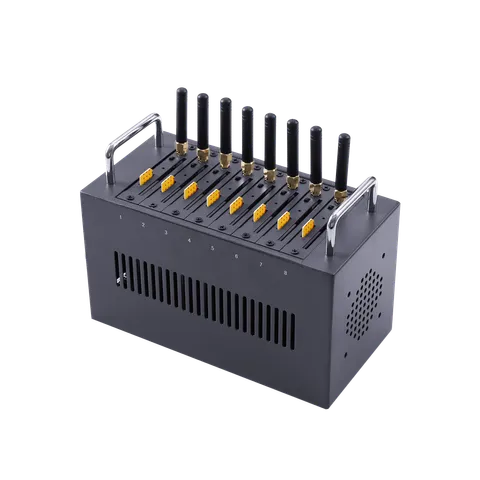
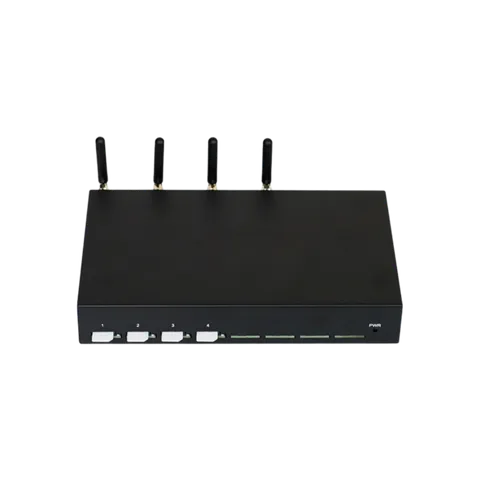
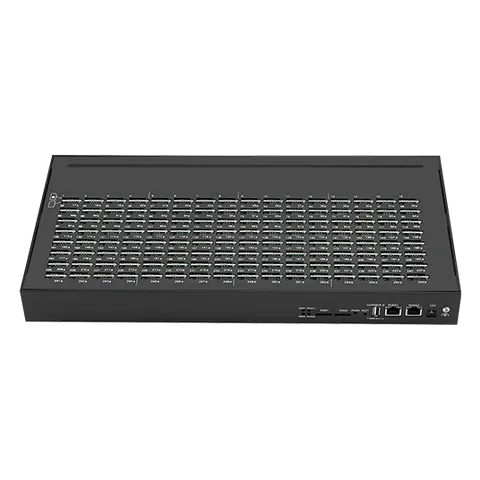
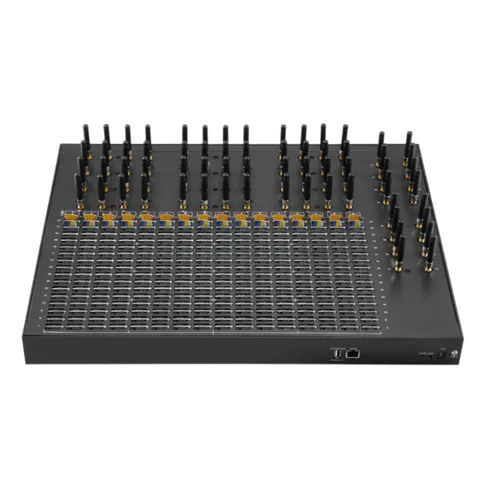
Telarvo’s official website advertises SMS Gateways supporting up to 512 SIM cards and SMS Modem Pools with 8-64 ports. Its SMS Gateway page also lists a vendor-claimed peak throughput of 5,440 SMS/minute.
These values serve well for initial model screening but cannot replace real-world testing. Different vendors apply varying assumptions for SMS message length, mobile operators, network standards, and measurement time windows; direct side-by-side comparison of published numbers often yields misleading conclusions.
Interface Capabilities Shape Implementation Complexity
Telarvo’s TGW-SMS Gateway documentation states support for SMS sending, SMS receiving, SMPP, and HTTP APIs. For enterprise procurement teams, the mere existence of an interface is only a starting point. Further validation should cover:
- HTTP API authentication methods
- SMPP version and binding modes
- Inbound SMS callback formats
- DLR (Delivery Receipt) support
- Webhook payload fields
- Error-code definitions
- Rate-limiting rules
- Retry mechanisms
- Logging and audit fields
- Multi-device or multi-SIM management workflows
HTTP APIs often enable fast integration with existing CRM, ERP, order-management systems, or message queues. SMPP may better satisfy architectural requirements when message queuing, delivery receipts, retries, and advanced message-orchestration logic are required.
Telarvo Is Not Comparable to SMSPool-Style Temporary-Number Services
SMSPool-style services focus on one-off numbers, short-lived numbers, or web-based verification-code reception. They work best for:
- Temporary numbers for automated testing
- Authorized short-term verification testing workflows
- Development pipelines without long-term number-control requirements
- Test environments requiring fast access to number resources
Telarvo’s public product portfolio centers on physical devices, SIM cards, SMS Gateways, cellular-network access, and enterprise-system integration. It is better suited for:
- Enterprise notifications and order-related messaging
- Two-way customer-service SMS
- SMS send-and-receive via local SIM cards
- Infrastructure build-outs for mobile operators or SMS aggregators
- Teams that wish to retain full control over devices, phone numbers, and message routing
Procurement priorities differ drastically between the two categories. For temporary-number services, evaluate number inventory, target-country coverage, platform compatibility, refund policies, and service-term limits. For physical SMS gateways, assess hardware models, frequency bands, SIM-card plan terms, independent radio channels, APIs, lead times, warranty coverage, and operational-support responsibilities.
Neither class of service guarantees acceptance of your numbers by all third-party platforms. Neither may be used to circumvent platform verification rules, perform bulk account registration, or for any other unauthorized activity.
Where Telarvo Ends and IoT/M2M SIM Platforms Begin
IoT/M2M SIM platforms prioritize data connectivity, multi-network roaming, APN configurations, VPN access, device management, and full SIM-lifecycle handling. They are built for trackers, industrial hardware, remote sensors, and fleet-management systems.
Physical SMS SIM card pools focus on connectivity among multiple SIM cards, SMS modems, SMS Gateways, SMS send/receive operations, and business systems.
While both utilize SIM cards, procurement considerations diverge:
| Procurement Question | SMS SIM Card Pool | IoT/M2M SIM Platform |
|---|---|---|
| Primary Communication Target | Mobile-handset SMS and enterprise SMS systems | Sensors, gateways, and connected devices |
| Core Capabilities | SMS sending, receiving, routing, and application interfaces | Data connectivity, roaming, APN settings, and device management |
| Key Performance Indicators | Concurrent SMS channels, DLR, inbound-SMS handling, SIM-card status | Data-usage volume, network coverage, device online-rate, and SIM lifecycle |
| Common Interfaces | HTTP API, SMPP, Webhook | Platform-management APIs, device-management interfaces, and network-configuration endpoints |
| Procurement Control Points | Hardware devices, SIM cards, gateway software, and mobile-operator policies | Service plans, network access, platform accounts, and device compatibility |
Table source: original reference document
If data-driven device connectivity is your core requirement, prioritize IoT/M2M solutions. If high-volume SMS transmission/reception and enterprise-grade SMS routing are central to your business, evaluate Telarvo’s SMS Gateway and SIM Pool offerings.
Differences Between Telarvo and Software-Only SMS Gateways Such as Ozeki
Software-based SMS Gateways like Ozeki primarily govern how business applications manage SMS traffic. Telarvo delivers SMS Gateway hardware, SIM-card hosting infrastructure, and associated communication solutions.
Enterprises can visualize these products as separate system layers:
Diagram source: original reference document
During procurement, clarify explicitly which party supplies each layer. Purchasing Telarvo hardware does not automatically include SIM-card service plans, operator phone numbers, SMS-software licenses, managed hosting, or global SMS traffic volume.
If your enterprise already owns SMS software and SIM-card resources, evaluate Telarvo hardware as your cellular-access layer. If you want a fully managed SMS platform, confirm whether Telarvo’s specific offering includes cloud-platform capabilities, messaging-traffic services, and operational support.
Scenarios Where Telarvo Deserves Priority Evaluation
Telarvo warrants early technical assessment under these conditions:
You Require Self-Owned SIM Cards and Local Cellular-Network Access Enterprises may select SIM cards matching the regulatory and operator requirements of target countries, and implement SMS sending and receiving via the gateway. Compared with fully outsourced third-party number pools, this model preserves greater control over hardware and phone numbers.
You Need Two-Way SMS If workflows involve outbound notifications plus inbound customer replies, device alerts, or confirmation messages, carefully assess inbound-SMS capabilities, logging, routing, and callback mechanisms. Telarvo’s official SMS-Gateway product scope explicitly covers both sending and receiving SMS.
You Want Flexibility Between HTTP API and SMPP Interfaces Enterprise systems may start with HTTP APIs and migrate to SMPP later as traffic scale and message-queue-management needs expand. Telarvo product documentation lists both interface families as available, forming a good starting point for technical review; always verify exact interface specifications for your chosen hardware model.
You Plan Phased Deployment Telarvo’s documented deployment paths include purchasing complete hardware units for platform integration or connecting your pre-existing hardware. This approach suits teams with partial SMS-hardware inventory or those planning gradual capacity expansion.
Key Questions to Ask Vendors During Procurement
Hardware-Related Questions
- How many SIM slots are available per hardware model?
- Do port counts equal the count of independent modems?
- How many independent RF modules are present?
- Which 2G and 4G-LTE frequency bands are supported?
- Have target-country mobile operators been validated with this hardware?
- Does the unit support physical SIM cards, eSIM, or both?
Performance-Related Questions
- What are the published peak throughput and sustained throughput values?
- What message length was used for performance testing?
- Did testing include inbound-SMS traffic?
- What country, mobile operator, and cellular standard were used for benchmarking?
- Are performance numbers vendor-advertised figures or results from independent real-world testing?
Interface-Related Questions
- What exact versions of HTTP API and SMPP are implemented?
- Are DLR, Webhook callbacks, and inbound-SMS handling supported?
- How are authentication, rate limiting, retries, and error handling implemented?
- Are device logs, SIM-card-status reporting, and audit records exposed?
- Is public developer documentation or a sandbox test environment available?
Procurement and Operational-Support Questions
- Which party supplies hardware, SIM cards, software licenses, and messaging-traffic services respectively?
- Are minimum-order-quantity (MOQ) requirements enforced?
- How are lead times and stock availability confirmed?
- What does the warranty cover?
- How are spare-part fulfillment and remote technical support arranged?
- How are firmware-version updates and interface-change notifications delivered?
Functions That Should Not Be Stated as Guaranteed Contractual Obligations
SIM rotation, routing controls, transmission-interval tuning, and multi-number management support operational configuration. However, avoid contractual guarantees such as “anti-blocking protection”, “100-percent message delivery”, or “guaranteed receipt of all verification codes”.
SMS outcomes depend on mobile-operator policies, end-user consent, message content, transmission frequency, phone-number registration history, third-party-platform rules, and local legal regulations. Compliant operation and thorough real-world testing deliver more value than simply increasing your SIM-card count.
Frequently Asked Questions
Is Telarvo a physical-hardware vendor or a cloud-SMS service provider?
According to public documentation, Telarvo supplies SMS Gateways, SMS Modem Pools, plus supporting SMS-routing and integration solutions. Hardware purchases, bring-your-own-device integration, platform services, and SMS-traffic resources must be validated separately for each solution package.
Is Telarvo always superior to temporary OTP-number platforms?
Not necessarily. Development-testing projects requiring one-time SMS reception may be better served by temporary-number services. Telarvo-style physical-infrastructure solutions fit customers needing long-term SIM-card ownership and control for enterprise inbound-outbound SMS workflows.
How should Telarvo and Ejointech be fairly benchmarked?
Run side-by-side evaluations using identical test parameters: target country, mobile operator, message length, testing duration, concurrency targets, and performance-measurement methodology. Compare SIM-slot counts, independent RF-module quantities, sustained throughput, HTTP/SMPP completeness, inbound-SMS functionality, bundled software, warranty terms, and procurement logistics. Do not compare only peak-throughput figures taken from vendor webpages.
Does Telarvo work for IoT/M2M projects?
If your IoT project needs SMS-based alerting or inbound control messages, evaluate its SMS-Gateway line of products. If core requirements center on multi-network data connectivity, APN, VPN, and full-device-lifecycle management, assess dedicated IoT/M2M connectivity platforms instead.
Conclusion: Let Product Categories Shape Your Vendor Shortlist
Selecting an Automated SMS SIM Card Pool Provider starts by clarifying business-control requirements and system boundaries — not by reviewing arbitrary vendor rankings.
When your enterprise requires self-owned SIM cards, local cellular-network access, two-way SMS, HTTP/SMPP integration, and scalable SMS-Gateway hardware, Telarvo merits inclusion in your first-round technical evaluations. Share details such as target markets, projected SMS volumes, peak concurrency ratios, inbound-SMS percentage, SIM-card type, and existing-system specifications with Telarvo to receive procurement guidance matched to appropriate hardware models.
Blog
Learn more
Is a 2G GSM SMS Gateway Really More Cost-Effective Than a Cloud SMS Platform?
Is a 2G GSM SMS gateway cheaper than a cloud platform? We break down hardware, SIM, and maintenance costs to reveal the real total cost of ownership.
Global SMS Gateway Brands Comparison: Telarvo vs Cloud APIs
Compare Telarvo with Twilio, Sinch, Infobip and other cloud SMS APIs. Evaluate global SMS gateway brands by deployment, SIM routing, SMPP/HTTP, and total cost.
Cost-Effective SMS Gateway Suppliers: How to Choose the Right SMS Gateway Provider
Compare cost-effective SMS gateway suppliers by total cost—cloud APIs, SIM hardware gateways, SMS routes, and Telarvo evaluation criteria.