SMS Gateway SIM Pool for Operators: Boost Delivery, Cut Costs & Stay Compliant
Table of Contents
- What Is a SIM Pool? Definition and Role in an SMS Gateway
- How an SMS Gateway Works: From Submission to Delivery
- Core SIM Pool Scheduling Mechanisms: Rotation, Load Balancing, and Failover
- SIM Pool Use Cases: Four User Groups and Their Real Needs
- The Core Value of a Multi-SIM SMS Gateway
- SIM Pool vs. Single-SIM Gateway vs. Cloud SMS API
- Common SIM Pool Use Cases at a Glance
- Compliance Requirements for SMS Gateway Operations
- References and Data Sources
- Conclusion
At two in the morning, a manufacturing plant’s monitoring system flagged a critical temperature alert on a piece of equipment. The system generated the alert text immediately, but the message never went out. The reason was simple: the gateway had only one SIM card, and that card had been suspended the previous month for non-payment. By the time the morning shift noticed the problem, the equipment had been down for two hours.
The problem was architectural: all communication rode on a single card, and when that card failed, every alert went silent. To solve a problem like this, you first need to understand a concept—the SIM pool (SIM Pool).
What Is a SIM Pool? Definition and Role in an SMS Gateway
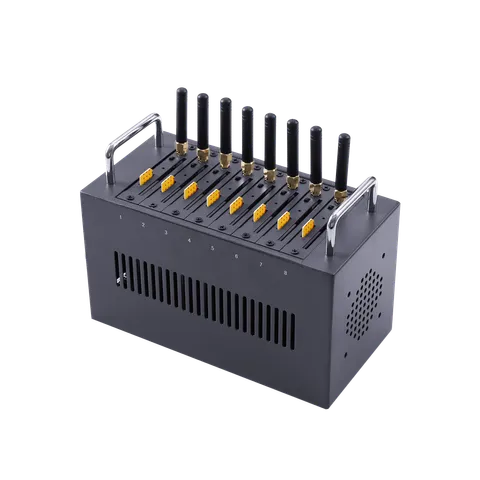
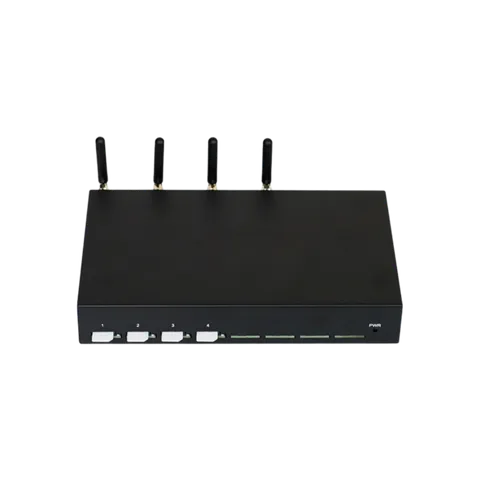
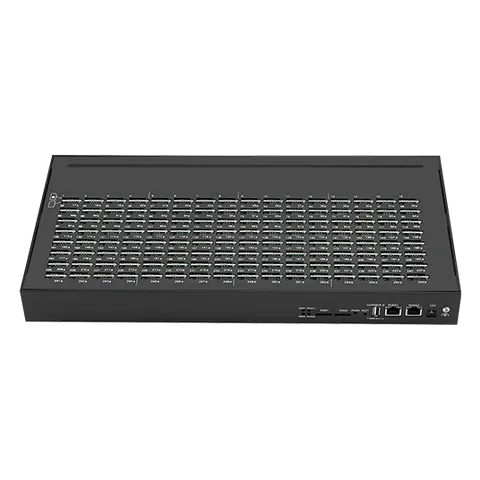
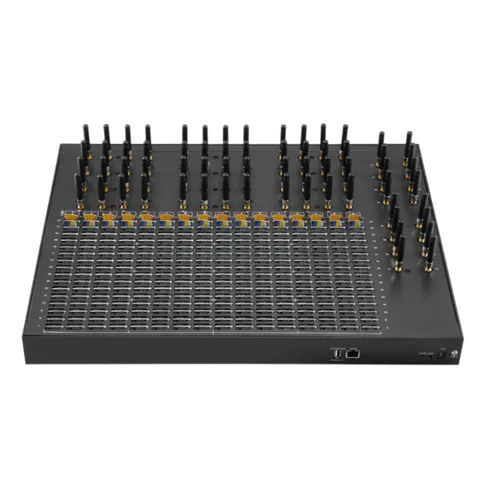
A SIM pool is simply a set of multiple SIM cards installed in a single SMS gateway, managed and scheduled by the system as one unit so the cards work together like a “pool.”
Go back to the scenario at the start. If the gateway held not one card but 8 or 16, the outcome would be completely different. When that suspended card went down, the system would hand the alert to another card with a healthy signal. The message would still get through, and the two-hour equipment outage would never have happened.
Here’s a simpler way to picture it: a single SIM card is like a one-lane road where all the traffic (text messages) has to queue up. A SIM pool is like merging several lanes into an interchange, where traffic can automatically take the clearest route. Add more cards and smarter scheduling, and overall throughput rises with them.
At the hardware level, the gateway acts as the bridge between the business system and the mobile network, and as the “brain” of the pool. Inside are multiple wireless modules, each with a SIM card, and messages go out over the mobile network. One more detail worth mentioning: a message first reaches the operator’s Short Message Service Center (SMSC), which then forwards it to the recipient’s phone. This mechanism is defined by the 3GPP TS 23.040 standard.
How an SMS Gateway Works: From Submission to Delivery
Before going further, let’s look at the steps a single message goes through. That will make the role of the SIM pool easier to follow.
The whole process has four steps:
- The business system (an alerting platform, for example) submits the message to the gateway.
- The gateway picks a SIM card from the pool according to a preset policy.
- That card sends the message through its operator’s mobile network to the operator’s SMSC.
- The SMSC forwards the message to the recipient’s phone.
Here’s a detail that matters for cost. Under 3GPP TS 23.040, a GSM-7 encoded message is limited to 160 characters. For Unicode characters such as Chinese (UCS-2 encoding), the limit is only 70 characters, and anything longer gets split into several segmented messages. That’s why marketing text should be costing out by “segments,” not by “messages.”
The process is a lot like mailing a letter. The business system is the writer, the gateway is the post office, the SIM cards are the different service windows, and the SMSC is the sorting center. Finally the letter lands in the recipient’s hands. The point of a SIM pool is that you have several windows to choose from instead of just one.
Core SIM Pool Scheduling Mechanisms: Rotation, Load Balancing, and Failover
A SIM pool has three core mechanisms, and each one addresses a specific problem.
First, rotation, which solves the overuse of a single card. The system distributes messages across the cards in order, taking turns. In an alerting system, 8 cards sharing the load means no single card gets hammered into early exhaustion or flagged by risk controls. When we run pool health checks for clients, we start by looking at the cumulative send-volume curve for each card. If one card sits well above the others, chances are the rotation policy isn’t taking effect. Following that lead usually pinpoints the issue.
Second, load balancing, which solves message backlog during peak hours. The system watches how busy each card is in real time and routes new messages to the idle ones. As soon as a card’s pending queue crosses a set threshold (say 100 messages), new traffic gets routed elsewhere. When we help clients diagnose high-concurrency OTP delays, we keep running into the trap of a single card being throttled by the operator. It looks online on the surface, yet sends are painfully slow. That’s exactly when load balancing across a multi-card pool becomes critical—spread the traffic to the other cards and the latency drops right away. E-commerce promotions are another classic case: reach 2 million members in 10 minutes, and a single card’s rate limit leaves messages queued for hours. Switch to a 16-card pool with load balancing, spread the load over 16 channels, and peak throughput rises 16-fold.
Third, failover, which solves business interruption when a card fails. When a card trips a failure condition—3 consecutive send failures, for instance, or signal strength below -110 dBm—the system isolates it automatically and shifts traffic to the healthy cards. The switch happens in seconds, and the business side barely notices. The alert that failed at the start of this article is exactly the case this mechanism fixes: the suspended card gets isolated and the alert goes out over a backup. One operations lesson is worth calling out here: don’t set the failure threshold too sensitively. We’ve seen clients set “1 failed attempt” as the trigger, and every small network blip caused constant card switching, which made delivery rates worse instead of better.
Beyond these three mechanisms sits a layer of intelligent scheduling. The system can score each channel on signal quality, historical delivery rate, and plan cost, then pick the best one dynamically. IoT platforms hit a common version of this problem: 100,000 devices spread across regions, a single operator’s cards, and poor coverage in some areas dragging delivery rates down. Mix in cards from several operators and the scoring model routes by regional signal quality, so delivery rates steady out. How the weights are set depends on the business goal. Alerting workloads give more weight to signal quality; marketing workloads lean toward cost.
SIM Pool Use Cases: Four User Groups and Their Real Needs
The mechanisms above are fairly abstract, so let’s switch angles. In the projects we’ve worked on, what decides whether a SIM pool makes sense has never been the technical specs—it’s the few things the business team wrestles with every day. The four user groups below cover the most common needs. Look at what each one ran into, then see how the SIM pool caught the problem.
| User Group | Use Case | Actual Problem | How the SIM Pool Solves It |
|---|---|---|---|
| Manufacturing ops teams | Factory intranet, alerts must arrive immediately | Single card suspended, high-temp alert missed, 2 hours of downtime | 8-card redundancy plus failover; a backup card sends the alert if one card fails, and data stays on the local intranet |
| E-commerce marketing teams | Reach 2 million members in 10 minutes during a promotion | Single-card rate limits leave messages queued for hours; per-message pricing drives up the bill | 16-card pool with load balancing; peak throughput up 16x; fixed plans instead of per-message fees, with three-year TCO at about 1/4 of the cloud option given 3 million messages/month, $0.015 per cloud API message, and $2/month per SIM plan |
| IoT platform operators | Status reporting and control for 100,000 devices | One operator’s cards have weak signal and low delivery in some regions | Mix cards from multiple operators and route by signal quality, automatically avoiding congestion and weak coverage |
| Cross-border e-commerce teams | OTP login codes to European users | Low international delivery rates; user data exports face compliance review | Deploy a local card pool in the target country so messages travel over the local mobile network; keep data local and follow GDPR and PIPL compliance processes |
Looking at the table, these four scenarios look very different, but they share one thing in common: stability, cost, and compliance depend on the sending architecture, not on the message content itself. A single-card gateway piles all the risk onto one point. A SIM pool uses redundancy, traffic splitting, and intelligent scheduling to spread that risk out. If your situation matches one of the rows above, that’s a good signal to evaluate along these lines.
The Core Value of a Multi-SIM SMS Gateway
To sum up what came before, the value of a SIM pool comes down to four words.
Reliability. Multi-card redundancy plus failover means you won’t see the “one card dies, everything stops” situation again.
Privacy. Data stays local and never passes through a third-party cloud. When personal information is involved, data export obligations are governed by the Personal Information Protection Law of the People’s Republic of China.
Cost. Fixed plans replace per-message billing, and once volume passes the modeled threshold, total cost falls below the cloud option.
Elasticity. Scale by adding SIM cards when you need to, absorbing business growth and traffic spikes.
SIM Pool vs. Single-SIM Gateway vs. Cloud SMS API
Once the value is clear, the next question is how it stacks up against the alternatives. The table below lays out the key differences.
| Factor | Single-SIM Gateway | SIM Pool Gateway | Cloud SMS API |
|---|---|---|---|
| Stability | Single point of failure | Multi-card redundancy + failover | Provider SLA |
| Data privacy | Local loop | Local loop | Via third-party platform |
| Cost (3M messages/month) | Insufficient capacity | Three-year TCO about 1/4 of cloud, given 3M messages/month, $0.015 per cloud API message, and $2/month per SIM plan | Linear per-volume billing, about $45,000/month at $0.015/message |
| Global reach | Limited by local cards | Limited by local cards | Covers most countries and regions |
| Time to launch | Under a day | Days to weeks | Hours to days |
| Best for | Feature testing, personal verification | Industrial monitoring, e-commerce promotions, IoT, local-scale workloads | Fast cross-border launches and workloads under 100,000 messages/month |
TCO note: The cost figures above come from a model based on the stated assumptions. Actual rates are subject to quotes from operators and service providers.
Put simply, below 100,000 messages per month with no data localization requirement, a cloud API wins on total cost. Above 1 million messages per month with a data localization requirement and a team that can handle basic operations, a SIM pool is the better fit.
Common SIM Pool Use Cases at a Glance
Matched to real business needs, SIM pools are used in these scenarios:
- Critical alerts: power failures, equipment faults, security alarms—the kind of scenario manufacturing ops teams own, where messages must arrive and a single point of failure is unacceptable;
- OTP verification: registration and login codes, common in cross-border businesses, high-volume and highly sensitive to delivery latency;
- Bulk marketing: e-commerce promotions and member notifications, the main stage for marketing teams, with peak traffic that needs multi-card splitting. Note that commercial messages require recipient consent and an opt-out mechanism in each message;
- IoT communications: high-volume device status reporting and control commands, typical for IoT platform operators;
- Cross-border business: local card pools in target countries to meet local data protection and SMS regulations.
Compliance Requirements for SMS Gateway Operations
Technical matters are one thing, but sending texts is hardly a law-free zone. In our compliance audits, we ask clients to work through the checklist below item by item—commercial message authorization records and retention logs are the two areas most often flagged. Every regulation in the table links to the official text so you can check the current version yourself. All entries are in force as of November 2026.
| Regulation (click for official text) | Effective | SMS-relevant requirements |
|---|---|---|
| Provisions on the Administration of Short Message Services (MIIT Order No. 74, revised) | May 1, 2026 | Commercial messages require and must retain proof of recipient consent; provide a convenient, effective opt-out; retain send/receive timestamps and numbers for at least 6 months; no mixing of port codes; sender identity must be traceable |
| Cybersecurity Law of the PRC (2025 amendment) | January 1, 2026 | Network operator security duties and user information protection; stiffer penalties after amendment |
| Regulations on Network Data Security Management (State Council Order No. 790) | January 1, 2025 | Detail the “notice-consent” rule, individual rights exercises, and obligations of large processors |
| Personal Information Protection Law of the PRC | November 1, 2021 | A lawful basis is required to process personal information; cross-border transfers must meet statutory conditions |
| Anti-Telecom Network Fraud Law of the PRC | December 1, 2022 | Real-name registration of SIM cards, control of abnormal cards; prohibits Illegal trading, leasing, or lending of SIM cards |
| Advertising Law of the PRC (2021 amendment) | April 29, 2021 | Advertising texts must identify the true sender and contact details |
| GDPR (Regulation (EU) 2016/679) | May 25, 2018 | Lawful basis for processing personal data and cross-border transfer rules |
| ePrivacy Directive (Directive 2002/58/EC, 2009 consolidated version) | Adopted 2002, consolidated December 19, 2009 | Prior consent required for electronic marketing communications |
| TCPA (Telephone Consumer Protection Act, 47 U.S.C. § 227) | 1991 | Prior express consent required for automated marketing texts |
| CAN-SPAM Act (15 U.S.C. § 7701 et seq.) | 2003 | Commercial electronic messages must offer opt-out and truthful sender information |
With the statutes laid out, the real work is execution. After checking the regulatory list, here’s what day-to-day operations actually require.
Compliance Checklist
In daily practice, a few things need to be in place:
- Register every SIM card under a real name and keep records of card number, user, and purpose;
- Obtain and retain proof of recipient consent before sending commercial messages, and provide a convenient, effective opt-out in every message;
- Keep commercial messages separate from operational and service messages on different port codes—no mixing;
- Accurately record and retain send/receive timestamps, sender and recipient numbers, and message content for at least 6 months;
- Store phone numbers and message content, and handle cross-border transfers, in line with PIPL, the Network Data Security Regulations, and GDPR;
- Carry the true sender identity in port-based messages so they can be traced.
Disclaimer: This article does not substitute for legal advice. Statutory provisions and regulatory practice change over time and vary by jurisdiction. For specific obligations, consult a qualified legal professional and defer to the latest texts published by the regulators.
References and Data Sources
3GPP TS 23.040, Technical realization of the Short Message Service (SMS) — SMSC forwarding mechanism, GSM-7 160-character and UCS-2 70-character encoding limits.
Provisions on the Administration of Short Message Services, published as MIIT Order No. 31 in 2015 and revised by MIIT Order No. 74, effective May 1, 2026. Source: State Council Gazette, gov.cn.
Personal Information Protection Law of the People’s Republic of China, adopted August 20, 2021, effective November 1, 2021. Source: National People’s Congress.
Regulation (EU) 2016/679 (General Data Protection Regulation), applicable from May 25, 2018. Source: EUR-Lex.
Directive 2002/58/EC (ePrivacy Directive), adopted July 12, 2002, current consolidated version dated December 19, 2009. Source: EUR-Lex.
TCPA, 47 U.S.C. § 227 (1991); CAN-SPAM Act, 15 U.S.C. § 7701 et seq. (2003). Source: U.S. Code.
Decision of the Standing Committee of the National People’s Congress on Amending the Cybersecurity Law of the People’s Republic of China, adopted October 28, 2025, effective January 1, 2026. Source: Cyberspace Administration of China.
Regulations on Network Data Security Management (State Council Order No. 790), published September 24, 2024, effective January 1, 2025. Source: gov.cn.
Conclusion
Back to the alert that failed at two in the morning. The issue wasn’t the texting technology itself—it was betting all communication on a single card. The SIM pool answer is direct: multi-card redundancy removes the single point of failure, load balancing absorbs peaks, failover catches anomalies, and fixed plans keep costs in check.
Going from “one card” to “a pool” is essentially the move from a workshop to industrial-scale operations for text messaging. When a business meets all three conditions—over 1 million messages per month, a data localization requirement, and a team that can handle basic operations—the SIM pool stops being optional and becomes infrastructure.
Once you understand the concept, the technical decisions around selection, comparison, and deployment get a lot clearer. At bottom, those specifications solve a very plain problem: making sure every important text arrives on time.
Blog
Learn more
SMS Gateway Real-Time Send and Receive: How Telarvo Enables Real-Time SMS Sending and Receiving
This article directly explains the meaning of SMS gateway real-time send and receive, and describes the hardware architecture, SIM card routing, IP network connectivity, and SMPP and HTTP API access methods of the Telarvo TGW SMS Gateway.
How Local 2G/4G Gateways Improve SMS Gateway Uptime Reliability (2026 Buyer Guide)
Compare SMS gateway uptime and reliability across local 2G/4G hardware and cloud routes. See how grey routes hurt deliverability, plus failover, latency and cross-border compliance tips.
Is a 2G GSM SMS Gateway Really More Cost-Effective Than a Cloud SMS Platform?
Is a 2G GSM SMS gateway cheaper than a cloud platform? We break down hardware, SIM, and maintenance costs to reveal the real total cost of ownership.