SMS Throughput Planning: Ports, Queues, and Rate Limits
introduction: Size SMS capacity from the carrier campaign cap downward, not from modem count upward. A low-volume 10DLC campaign is throttled to 75 messages per minute on AT&T regardless of how many SIM ports you own. Model ports for your peak window, then add a token-bucket rate limiter.
Throughput is a ceiling set by the carrier and your campaign tier. It is not a function of how much hardware you buy.
A low-volume 10DLC campaign is capped at 75 messages per minute across every number in that campaign on AT&T. T-Mobile defaults to 49 numbers per campaign. More ports raise neither number.
So plan in this order: find the carrier cap, size your peak window, derive the parallelism you actually need, then build a queue and a rate limiter that respect the cap.
Throughput is the maximum sustained message rate a carrier or campaign permits, expressed in messages per minute or per second, and it caps your send regardless of hardware.
Carrier-side caps you cannot engineer around
| Cap | Value | Source + verified |
|---|---|---|
| Low-volume campaign throughput | 75 messages per minute on AT&T, across all numbers in the campaign | RingCentral TCR fees · 2026-10-22 |
| Numbers per campaign | 49 by default on T-Mobile; exceptions available on request | RingCentral · 2026-10-22 |
| Third-party vetting trigger | Required above 2,000 messages/day to T-Mobile subscribers; unvetted traffic is blocked past that threshold | RingCentral · 2026-10-22 |
| Campaign monthly tiers | Low volume $1.50 / Standard $10.00 / Agents & Franchises $30.00 | Bandwidth · 2026-10-22 |
Comparison basis: US A2P 10DLC registered campaigns, per campaign, excluding carrier surcharges and taxes.
As of 2026-10-22. Re-verify cap values before capacity planning; campaign tier definitions have changed within the last twelve months.
The practical consequence catches teams in a specific way. You buy a 64-port gateway because the vendor’s port count promises headroom, you register a low-volume campaign because it is the cheapest tier at $1.50 a month, and then you discover that the ceiling everybody assumed was hardware is actually paperwork — 75 messages per minute on AT&T, regardless of how many modems are spinning. The fix is not more ports; it is either raising the campaign tier or splitting traffic across campaigns, and both require TCR approval, which means the decision has a lead time measured in days to weeks. Plan capacity backwards from the registration you can get approved, and treat the hardware purchase as the last step rather than the first. We have watched teams do this in the opposite order more than once, and it always ends with idle modems and a rushed campaign application. The sequence that works is duller: decide the use cases first, because the number of campaigns you need is determined by how many distinct message types you send and not by how much hardware you own. Register them, wait for approval, read the throughput that comes back, and only then size the modem pool against a number you actually have. If the approved tier turns out to be the bottleneck, the answer is a campaign application rather than a purchase order, and it costs $15 per vetting event instead of whatever the hardware would have run. Throughput is a registration property wearing a hardware disguise.
Sizing math: how many ports for a target
Worked example — 100,000 messages inside a four-hour window:
| Step | Calculation | Result |
|---|---|---|
| Required sustained rate | 100,000 ÷ 240 minutes | ~417 messages/minute |
| Carrier cap (low volume, AT&T) | 75 messages/minute | Campaign tier must be raised |
| Campaigns needed if capped at 75 MPM | 417 ÷ 75 | ~6 parallel campaigns |
| Ports at an assumed 10 msgs/min/port | 417 ÷ 10 | ~42 ports |
Assumption flag: the 10 msgs/min/port figure is a placeholder. We did not measure it and neither Telarvo nor any carrier publishes it. Measure it on your own hardware before you size anything.
This is why “how many ports do I need” has no universal answer. The campaign tier sets the ceiling; the per-port rate sets the parallelism; and nobody publishes the second one.
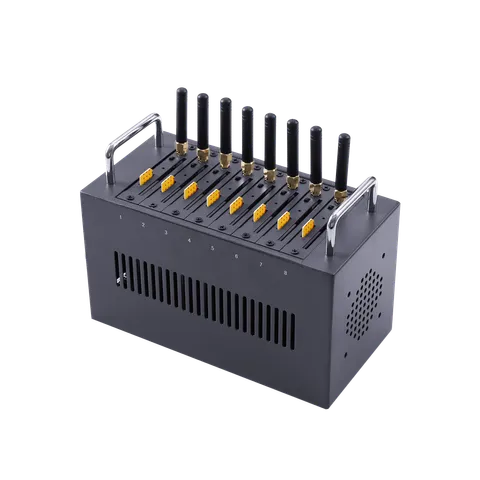
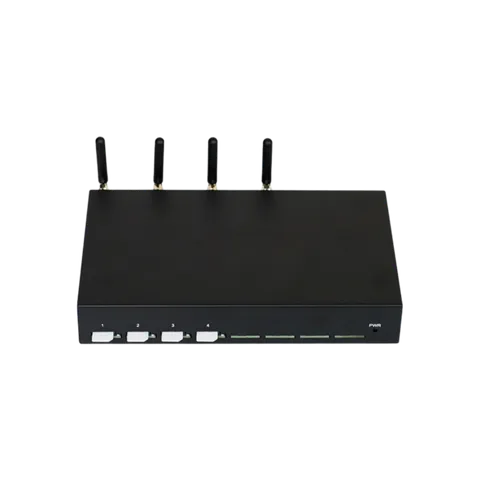
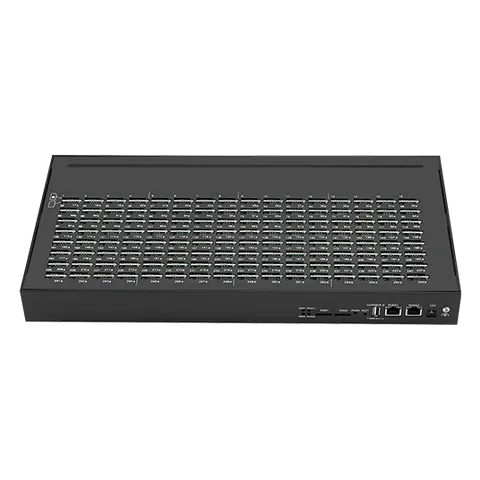
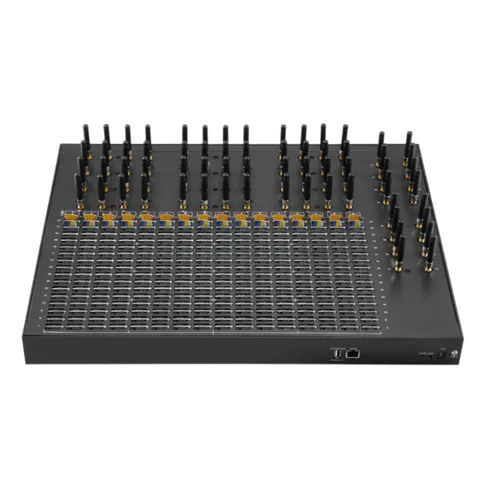
Telarvo lists port configurations — SMS modems at 8/16/32/64 ports, gateways at 16–64 and 64–512 (telarvostore.com, verified 2026-10-14). Per-port throughput: 未公开,需询价. Measure it on your own hardware and replace our placeholder.
The queue and the rate limiter
A token bucket is a rate-limiting algorithm that refills capacity continuously, avoiding the midnight boundary double-send that fixed-window counters permit.
Four decisions, and the third is the one teams get wrong.
| Decision | Recommendation | Why |
|---|---|---|
| Algorithm | Token bucket or sliding window | Fixed windows permit double-sends at the boundary |
| Key scope | Per user, per campaign, and per modem | One global counter hides per-modem saturation |
| Store | Redis with TTL | Shared across dispatch workers |
| Overflow behavior | Defer to next window or reroute to email | Protects SMS inventory for high-intent sends |
Comparison basis: design guidance for US A2P dispatch systems; not vendor-specific.
Backpressure: what to do when the queue grows
Backpressure is the set of behaviors — defer, reroute to email, or shed — that a sender applies when the outbound queue exceeds a safe depth.
Pick a queue-depth threshold and honor it.
Below it, send normally. Above it, defer low-priority traffic and keep capacity for transactional and high-intent messages. Shedding the cheapest traffic beats letting latency grow until every message lands late — a flash-sale alert that arrives after the cart closes is worse than no alert.
RCS fallback routing
RCS fallback is the automatic downgrade of a rich card message to plain SMS carrying the same short link when the destination handset cannot render rich content.
One rule decides whether this works at all.
Both paths carry the same short link. If RCS and SMS use different tracking parameters, your reporting splits by handset type and nobody can tell which creative actually performed — you will spend the next quarter A/B testing against an artifact.
FAQ
How many SMS can one SIM port send per day? Not published as a tariff figure, and carrier-dependent. Measure it on your own hardware over 30 days rather than trusting a vendor estimate.
Why is my AT&T throughput capped at 75 messages per minute? That is the low-volume 10DLC campaign ceiling. Raise the campaign tier or split across campaigns, subject to TCR approval.
Should I use Redis or a cron job for frequency capping? Redis. A cron-based reset drifts and can permit double-sends at the window boundary.
What is RCS fallback and do I need it in the US? It is the automatic SMS downgrade when a handset cannot render RCS. Keep the same short link on both paths so attribution stays intact.
What should I do when my SMS queue backs up? Apply backpressure: defer low-priority sends, reroute to email, or shed the lowest-value traffic.
Sources
- RingCentral TCR registration fees and campaign limits — verified 2026-10-14
- Bandwidth 10DLC campaign types and fees — verified 2026-10-14
- FreeClimb carrier SMS/MMS fees — verified 2026-10-14
- Telarvo Store — verified 2026-10-14
Blog
Learn more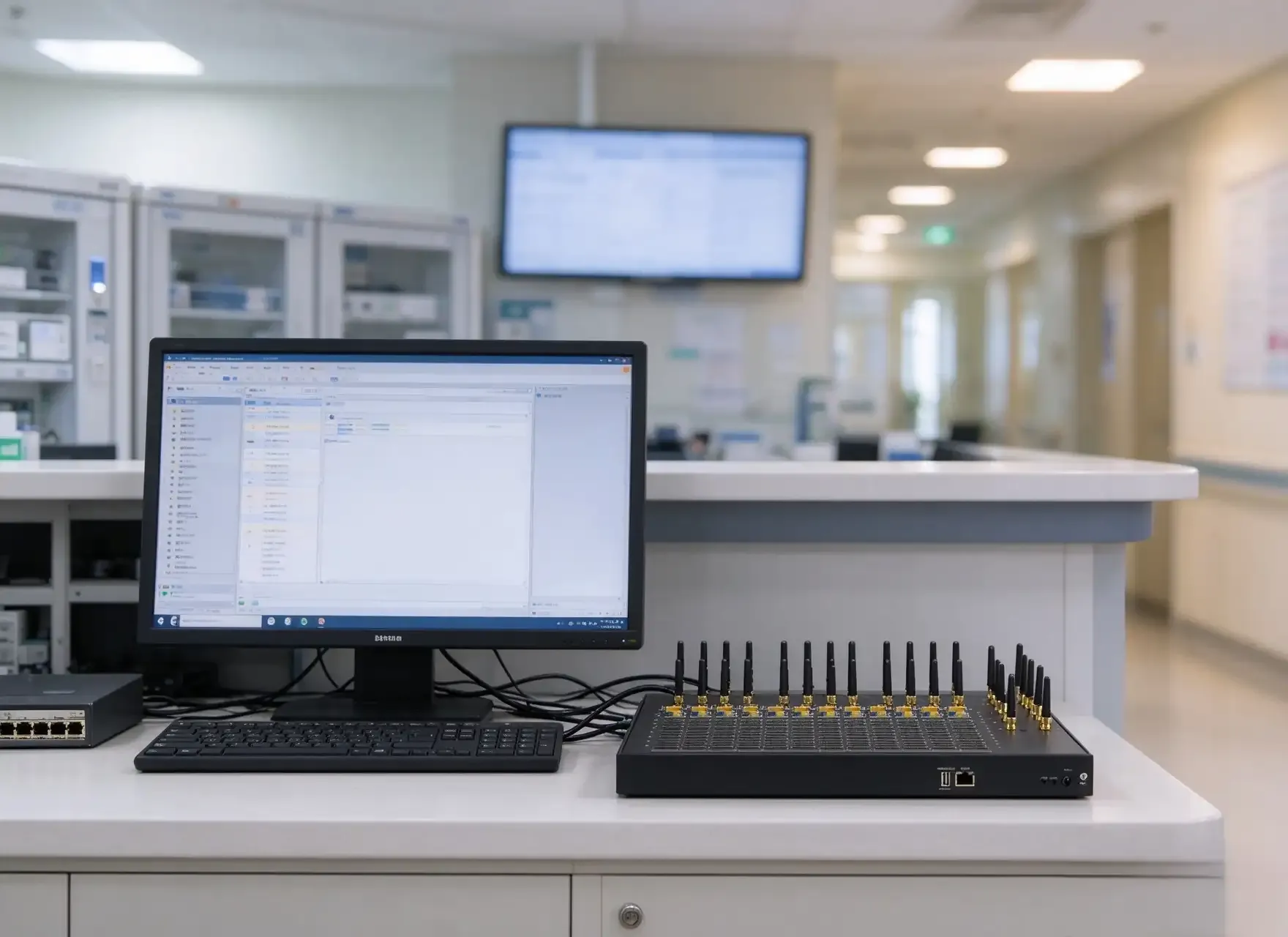
Is a 2G GSM SMS Gateway Really More Cost-Effective Than a Cloud SMS Platform?
Is a 2G GSM SMS gateway cheaper than a cloud platform? We break down hardware, SIM, and maintenance costs to reveal the real total cost of ownership.
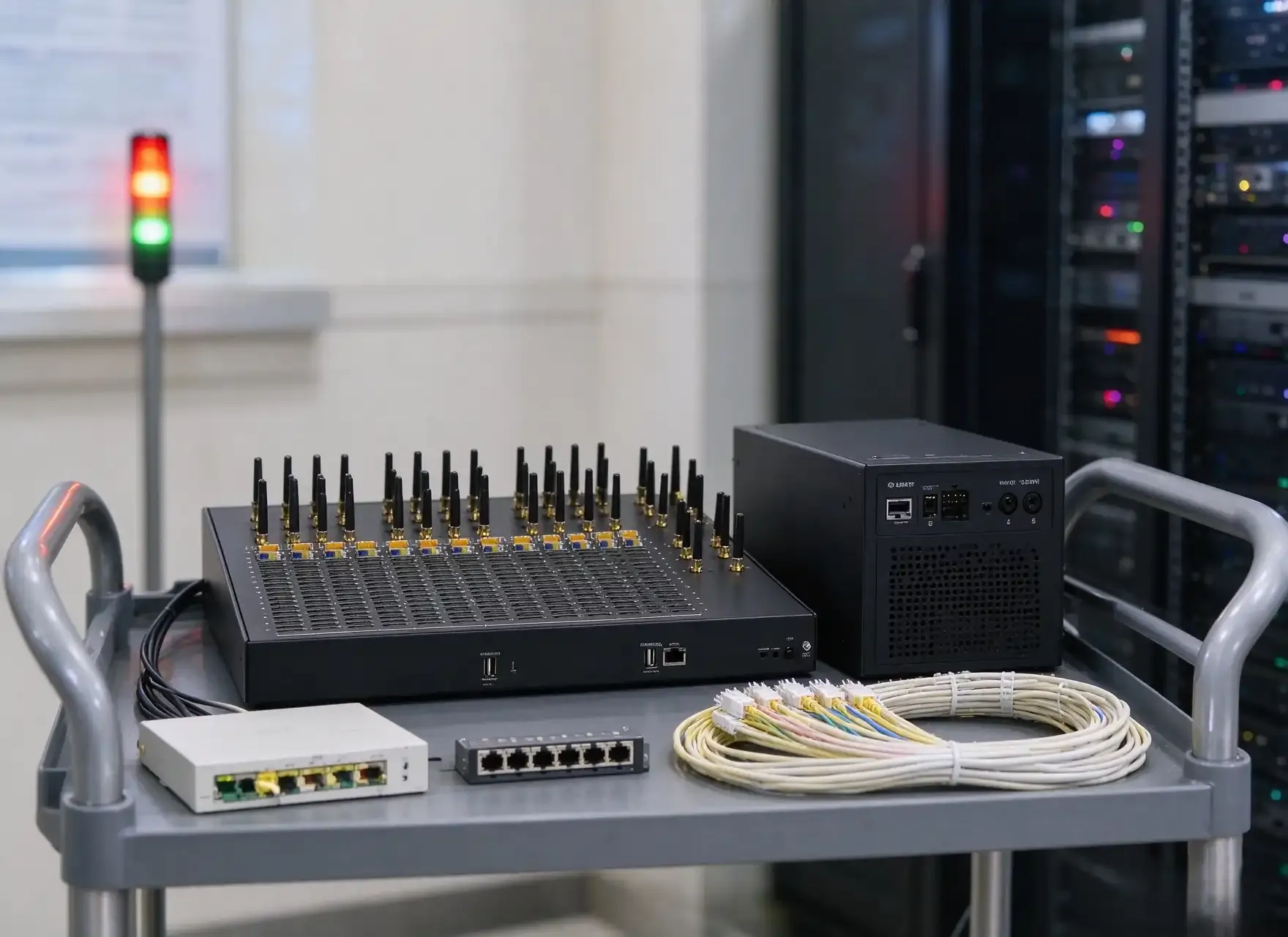
Global SMS Gateway Brands Comparison: Telarvo vs Cloud APIs
Compare Telarvo with Twilio, Sinch, Infobip and other cloud SMS APIs. Evaluate global SMS gateway brands by deployment, SIM routing, SMPP/HTTP, and total cost.
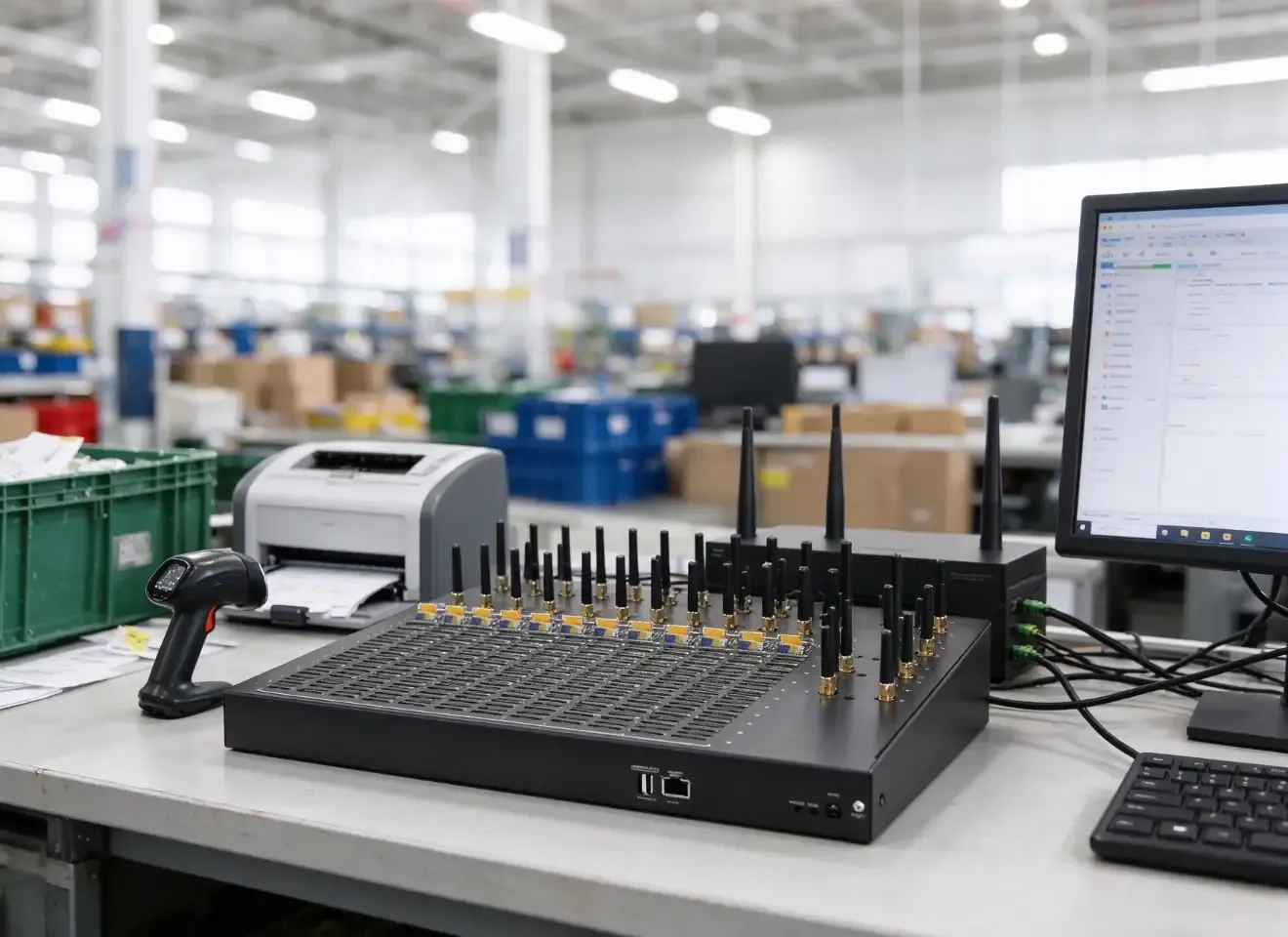
Cost-Effective SMS Gateway Suppliers: How to Choose the Right SMS Gateway Provider
Compare cost-effective SMS gateway suppliers by total cost—cloud APIs, SIM hardware gateways, SMS routes, and Telarvo evaluation criteria.