Top Bulk SMS Gateway Suppliers for Enterprises: How to Choose the Right Partner
In the fast-changing realm of business communications, bulk SMS serves as an essential tool for numerous vital tasks. These include OTPs and system alerts, along with marketing efforts and international messaging. A Statista report indicates that the worldwide SMS market should hit USD 23.27 billion by 2026. This growth stems mainly from rising needs for mobile communication options in various sectors. For companies, picking an SMS gateway provider involves more than simple features. It requires a reliable partner that offers strong capacity, reliable delivery, flexible connection methods, and expandable systems. These must handle the shifting and sometimes erratic demands of business messaging.
Selecting the proper bulk SMS gateway provider proves challenging. Businesses often dispatch millions of messages over diverse areas. Thus, ensuring dependability, adherence to rules, and quickness remains vital. Moreover, global telecom challenges, including different carrier policies, limits, and delivery details, bring added complexity. Providers need careful handling of these issues. This guide examines leading bulk SMS gateway providers for businesses. It offers a thorough review using key factors like capacity, connection options, assistance, and management tools for massive messaging. The piece seeks to arm corporate purchasers with insights to choose the ideal supplier. It also helps them manage the intricacies of bulk SMS setups well.
For enterprise buyers, bulk SMS is rarely one single flow. It’s usually a mix: ✔OTP and login codes that must arrive fast ✔system alerts that cannot get lost ✔delivery updates, ticket codes, password resets ✔marketing pushes that need decent reach without burning sender reputation
Skyline-The Top Bulk SMS Gateway Suppliers
If the buyer goal is “send a lot, across markets, and keep it steady,” Skyline fits that story well. Start with the business base. Skyline’s profile describes 18+ years in global telecom business and long-term cooperation with hundreds of telecom operators. That’s the kind of background enterprises use as a quick trust filter. Then look at what makes it practical for bulk messaging:
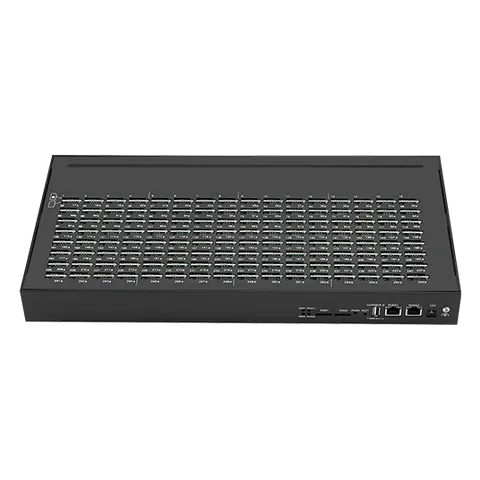
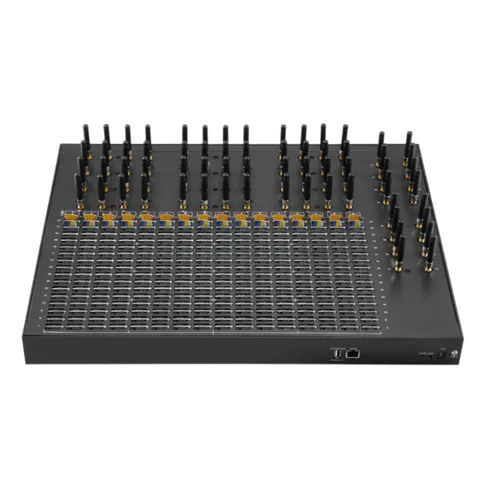
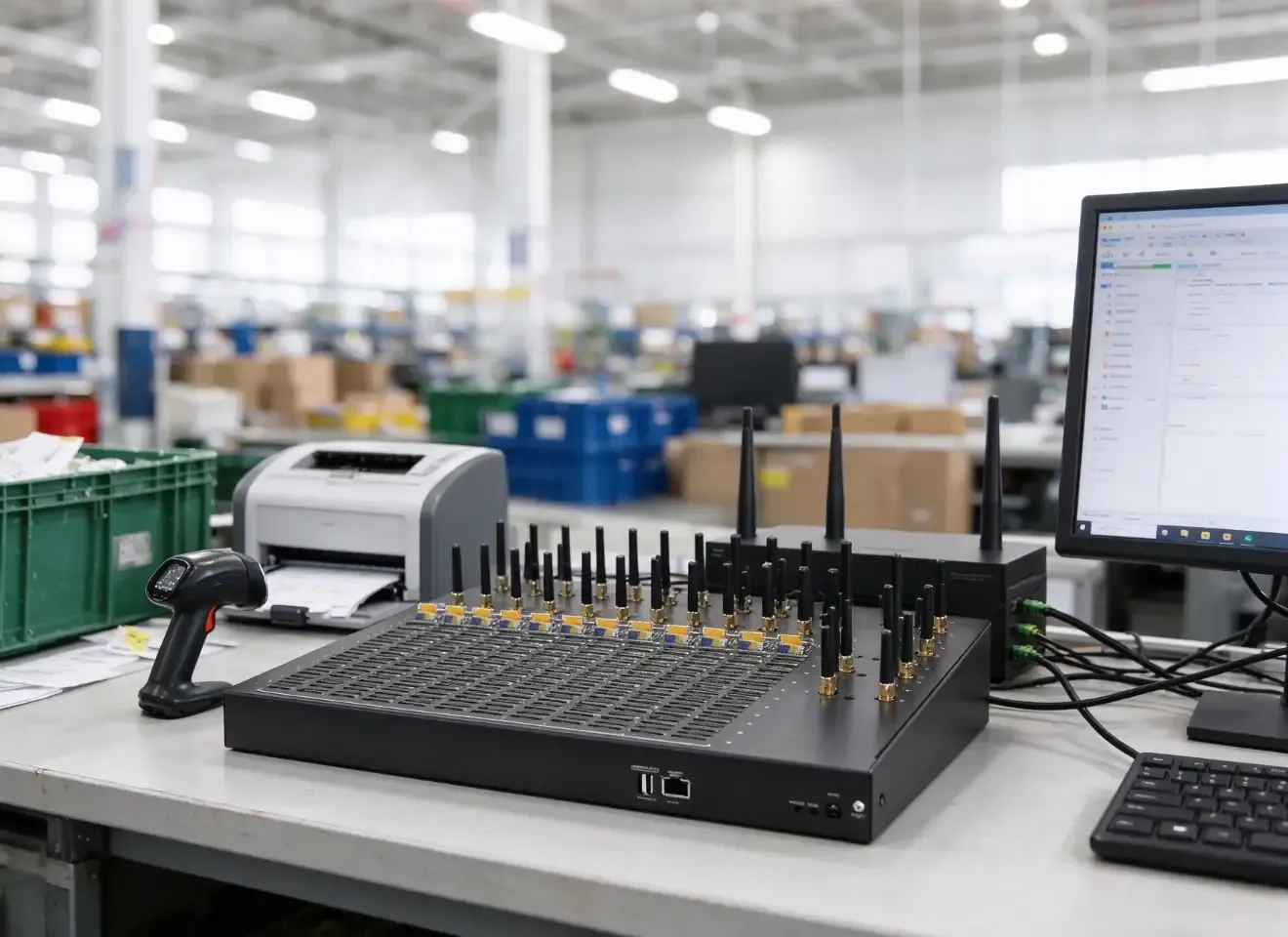
A) Real throughput numbers, not vague promises Skyline’s SMS gateway solution notes up to 512 SIM cards and max throughput of 5,440 SMS/min, plus real-time SMS receive. That matters when traffic isn’t smooth. OTP spikes are not polite.
B) Controls that keep sending behavior “human-like” Carrier filtering is a constant. One day a template is fine. The next day it’s not. Skyline lists behavior patterns like inter sending, auto SIM rotation, sending interval control, SIM usage tracking, and even live SIM status monitoring. This isn’t glam. It’s survival tooling.
C) Integration options that match enterprise reality Skyline supports HTTP API and SMPP, and also mentions web remote access modules and command access methods that are useful in operations-heavy environments. Different companies have different “IT styles.” The best suppliers don’t force one style.
D) More than SMS only Some enterprise messaging setups combine SMS and voice in the same operations flow. Skyline’s voice gateway solution describes up to 32 concurrent calls and SIM switching structures that can scale to larger SIM capacity. That’s relevant for call centers, verification flows, and mixed channel programs.
E) Support that looks structured, not random A buyer can like a product and still lose months because onboarding is messy. Skyline’s framework calls out pre-sales consulting, fast shipping, and post-sales coverage including 1-on-1 engineer support and 24/7 customer service groups. Not every vendor states that so directly.
Where Skyline fits best (common enterprise scenarios)
✔verification codes and login flows ✔system alerts and automatic alarms ✔ticketing and access codes ✔cross-border local access using local SIM gateway sending and receiving
How to Choose the Right Partner
Step 1: Split your message mix into three buckets Enterprises usually have:
✔OTP and security (speed and delivery consistency matter most) ✔alerts and notifications (reliability and clear failure reporting matter) ✔marketing and engagement (compliance, opt-out, pacing, and list hygiene matter)
Skyline’s solution list covers OTP-style verification codes, system notifications, ticketing codes, and marketing SMS scenarios, which makes it easier to align one supplier with multiple buckets.
Step2: Define “Go or No-Go” technical requirements A good enterprise baseline looks like this:
✔supports HTTP API and/or SMPP based on team needs ✔clear delivery receipts and error codes ✔controls for sending intervals and pacing ✔ability to monitor SIM or route status in real time ✔support response that is measurable
Skyline’s feature list includes HTTP API / SMPP, sending interval controls, auto-forward, and live SIM status monitoring, so those go into the “meets baseline” column quickly.
Step 3: Run a proof-of-performance pilot that’s not a toy test A more useful pilot is closer to this:
✔7 days minimum ✔3 time windows per day (morning, afternoon, late night) ✔at least 10 templates (OTP, alerts, marketing) ✔measure: delivery rate, median delivery time, and “long tail delays”
Step 4: Ask the uncomfortable contract questions These three catch people: ✔How is billing handled for long SMS that split into segments? ✔What happens when a route changes and delivery drops? ✔Who owns the logs and how long can they be exported?
If the vendor dodges these, that’s a signal.
Use-Case Matching (Which setup fits which enterprise)
Fast-growth app: OTP spikes + multi-region expansion This is where throughput and control tools matter. Skyline’s bulk SMS solution describing high throughput and large SIM capacity is more aligned with “spiky” traffic patterns than a bare-bones API-only service.
Logistics and marketplaces: alerts, tracking, two-way replies These businesses care about delivery status, retries, and sometimes inbound SMS handling. Skyline’s SMS gateway description supports sending and receiving, plus auto-forward and real-time receive options.
Financial services: governance, traceability, operational control What usually matters here is who can access what, and whether message actions can be tracked. Skyline’s system mentions web remote access and monitoring functions that fit operations teams that need visibility.
Cross-border programs: local SIM sending and local access This is a real-world pattern: use local SIM gateway sending and receiving to get local behavior in-country. Skyline explicitly lists “cross-border communications and local access” as an application scenario.
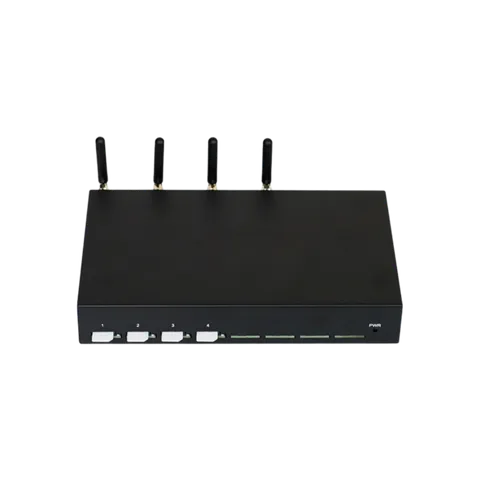
Small side note that always shows up in practice: hardware matters too. Antennas, heat, stable power. It sounds too physical for a “cloud” conversation, but the real world still has fans and cables. Skyline’s modem/gateway descriptions go into device structures and setup steps, which is the kind of detail operators appreciate.
The Enterprise Checklist
Routing and deliverability 1)Which countries are strongest, and which are weaker? 2)Can routes be adjusted by destination or traffic type? 3)How are retries handled?
Throughput 4) Peak TPS or per-minute capacity, and under what conditions? 5) What happens under burst load? Queue, reject, or throttle? 6) Can throughput be scaled without redesign?
Integration 7) HTTP API, SMPP, or both? 8) Webhooks for DLR and inbound? 9) Clear error codes and docs?
Controls 10) Sending intervals and pacing tools? 11) SIM rotation or equivalent routing behavior controls? 12) Live monitoring for SIM or route status? Skyline’s stack explicitly includes HTTP API/SMPP, sending interval controls, SIM rotation behavior, and live SIM status monitoring. That covers a big chunk of the checklist without extra guesswork.
Operations 13) Support coverage, escalation paths, response commitments? 14) Onboarding help, testing plans, migration steps? 15) Logs: export format, retention, access controls? Skyline describes 1-on-1 engineer support and 24/7 customer service groups, plus a process style framework that includes pre-sales and logistics.
Compliance and reputation 16) Sender options by country and traffic type? 17) Template rules and content guidance? 18) Opt-out handling for marketing?
Commercial 19) Rate card clarity and volume tiers? 20) Long SMS segmentation billing? 21) Inbound SMS pricing?
Security 22) Access roles and audit trails? 23) IP allowlist support? 24) Data handling and retention controls?
Reality check 25) Can the vendor show a pilot plan that measures what matters?
Wrap-up: picking a supplier without getting stuck later
The “right supplier” is the one that still works after the first month. Skyline stands out because it describes enterprise-friendly details in plain terms: long-term operator cooperation, multi-region scope, support structure, and hardware plus platform options. It also puts numbers on capacity, like 5,440 SMS/min and up to 512 SIM cards, which is the kind of thing procurement teams and engineering teams can both use.
For teams building bulk messaging into core product flows, it’s worth starting the evaluation with Skyline and running a proper pilot tied to real traffic patterns.
FAQ
Q1:What makes an “enterprise” bulk SMS gateway different from a basic SMS tool? A:Enterprise setups need more than sending. They need steady throughput, delivery receipts that can be trusted, traffic controls (pacing, intervals), and support that can respond fast when carriers change behavior.
Q2:How big should a pilot test be before signing a long contract? A:A useful pilot usually runs at least 7 days, hits multiple time windows, and tests several template types. The goal is not a perfect success rate in one hour. The goal is to see the worst days and how the supplier handles them.
Q3:Which integration is better for enterprises, HTTP API or SMPP? A:It depends on the team. HTTP API is common for modern product stacks. SMPP is still popular in telecom-heavy setups where throughput tuning and legacy systems matter. A supplier that supports both makes life easier when different teams inside the same company want different approaches. Skyline lists HTTP API and SMPP support, which fits that mixed reality well.
Blog
Learn more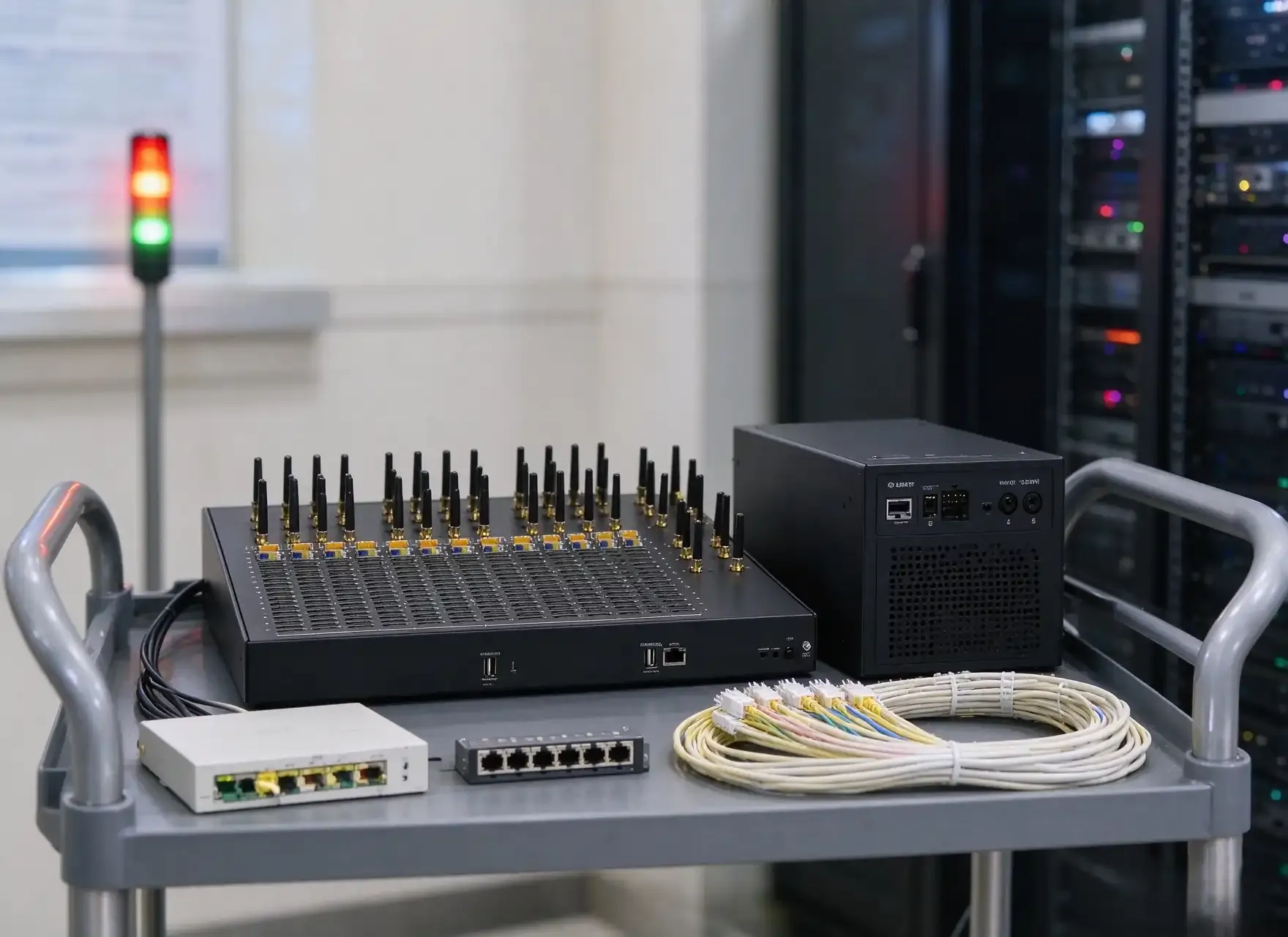
Global SMS Gateway Brands Comparison: Telarvo vs Cloud APIs
Compare Telarvo with Twilio, Sinch, Infobip and other cloud SMS APIs. Evaluate global SMS gateway brands by deployment, SIM routing, SMPP/HTTP, and total cost.
Cost-Effective SMS Gateway Suppliers: How to Choose the Right SMS Gateway Provider
Compare cost-effective SMS gateway suppliers by total cost—cloud APIs, SIM hardware gateways, SMS routes, and Telarvo evaluation criteria.

Choosing a Self-Hosted SMS Gateway: SMS Modem Data Privacy and Security Guide
Self-hosting an SMS modem improves data control but does not equal compliance. Covers GDPR Art. 32 measures, IMEI tampering risks, carrier SIM blocking, and real test results from Telarvo hardware.